
The right cycling shorts – a buyer’s guide for every bike and every riding position.

Löffler produces more than 30 different cycling shorts and tights, including bib shorts, tights, cycling undershorts, cycling shorts, and thermal tights. All are manufactured in Ried im Innkreis, Austria, and Tryavna, Bulgaria. The right choice depends on four factors: What type of bike do you ride? What is your riding position? How long are your rides? And in what temperatures do you ride? This guide will help you find the right cycling shorts in four simple steps.

Welchen Hosentyp brauchst du?

Bib Shorts
Typ Kurze Trägerhose mit Polster
Empfehlung bei Rennrad, Gravel, lange Touren
Temperatur 15–35 °C
Kurze Radhose
Typ Ohne Träger, mit Polster
Empfehlung bei Touring, MTB, E-Bike
Temperatur 15–35 °C
3/4-Radhose
Typ Knielange Hose mit Polster
Empfehlung bei Übergangszeit, Frühjahr/Herbst
Temperatur 8–20 °C
Lange Bib Tights
Typ Lange Trägerhose mit Polster
Empfehlung bei Wintertraining, kalte Tage
Temperatur −5–10 °C
Thermo-Tights (Airblocc)
Typ Lange Hose, winddichte Front
Empfehlung bei Sehr kalte Tage, Windschutz
Temperatur −10–5 °C
Radunterhose
Typ Unter normaler Kleidung
Empfehlung bei Pendeln, Touren, E-Bike
Temperatur Ganzjährig
Radshorts (Baggy)
Typ Lockere Shorts, über Radunterhose
Empfehlung bei MTB, All Mountain, Gravel
Temperatur 10–35 °C

Step 1: Which type of cycling shorts do you need?

Type of cycling shorts What is it?

Recommended for

Temperatur
Bib Shorts Short bib shorts with pad Road cycling, Gravel, Long distance rides 15–35 °C
Short cycling shorts

Short cycling shorts without bib straps, with pad.

Touring, MTB, E-Bike 15–35 °C
3/4 cycling shorts

Knee-length cycling tights with pad.

Transitional seasons, Spring Autumn 8–20 °C
Long Bib Tights

Long bib tights with pad.

Wintertraining, Cold days −5–10 °C
Thermo-Tights

Long cycling tights with a windproof front.

Very cold days, Commuting −10–5 °C
Cycling undershorts

Under regular clothing.

Commuting, Touring, E-bike, Everyday cycling Ganzjährig
Cycling shorts

Loose-fitting shorts worn over cycling undershorts.

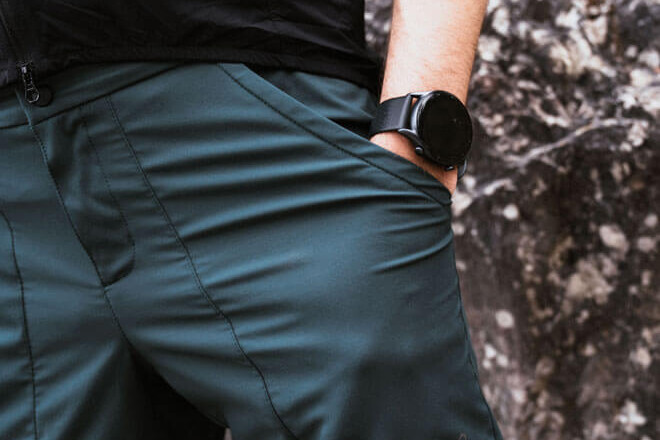
MTB, All Mountain, Gravel 10–35 °C

Step 2: Which cycling shorts are best for which type of bike?

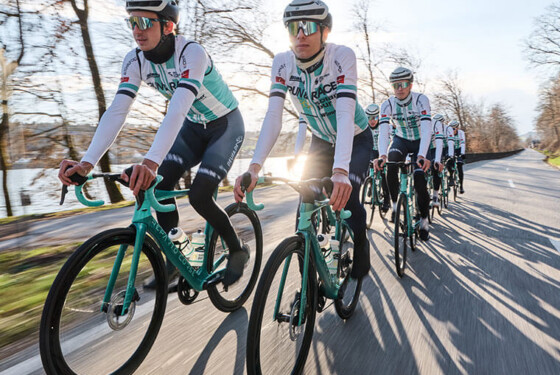
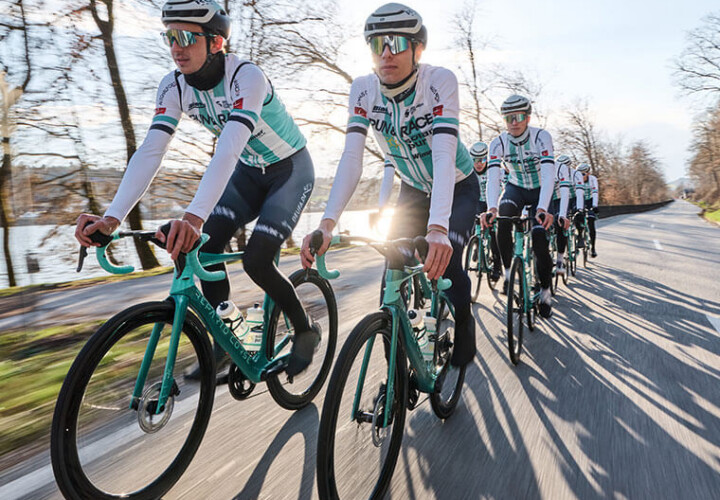
Road bike → Bib shorts or long bib tights.

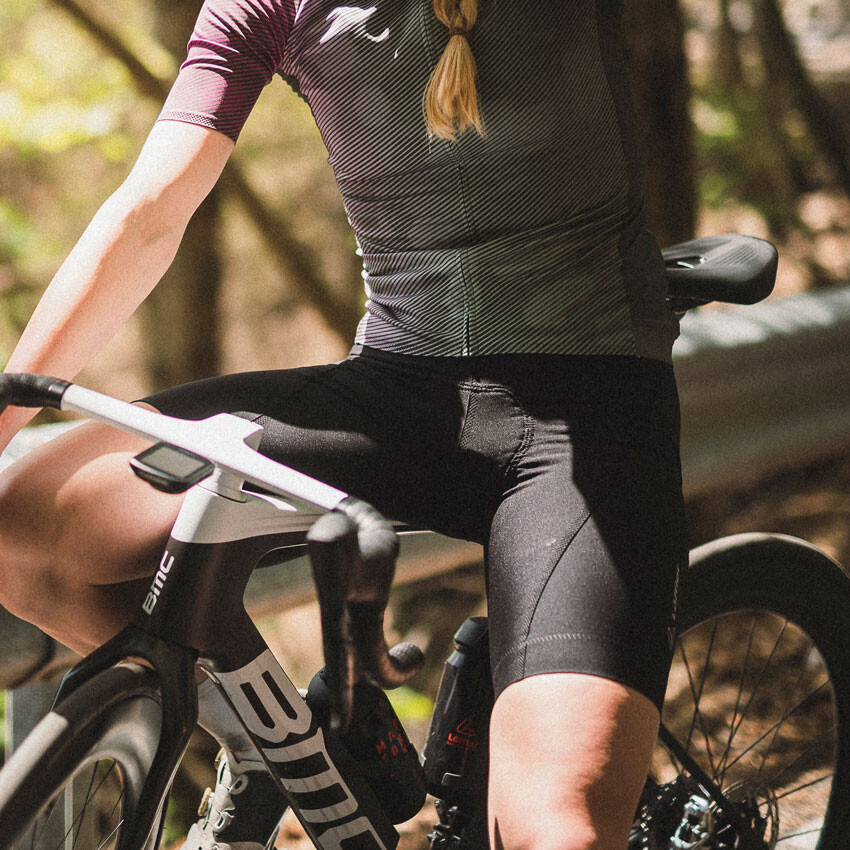
On a road bike, you ride in a forward-leaning position with an extended back. In this position, shorts without bib straps tend to shift, making bib shorts the best choice. The straps keep the shorts securely in place and prevent the waistband from digging in.

  • Recommendation: Summer road cycling → hotBOND® RF SQL Bib Shorts (30404/30410). Elastic Interlock fabric, SQlab-XP/6 Pro pad (6 mm, 360 kg/m³), ultrasonically bonded seams, and a hotBOND® reflective seam for enhanced visibility.
  • Recommendation: Winter road cycling → hotBOND® RF SQL Bib Tights (28918/28926). The same pad and fabric, but with full-length legs and a windproof front (Airblocc).

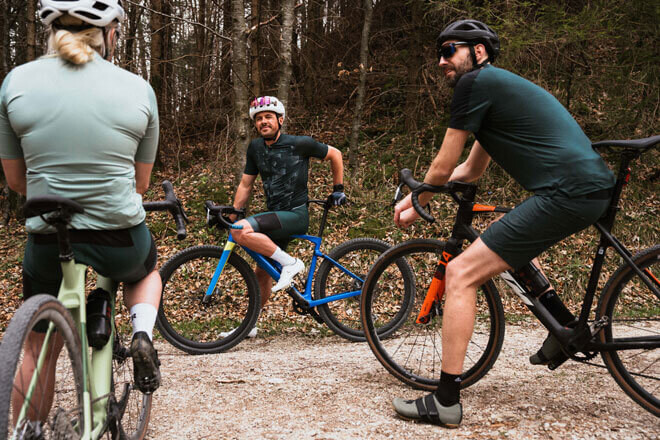
Gravel riding → SKYS bib shorts or cycling shorts combined with cycling undershorts.

Gravel riders need more storage space and versatility than road cyclists. The SKYS collection delivers both.

  • Recommendation: Performance gravel riding → SKYS XT Bib Shorts (30405). Elastic Interlock fabric, CF Extreme seat pad for long distances, side mesh pockets, and mesh bib straps.
  • Recommendation: Casual gravel riding / bikepacking → SKYS-E TSL cycling shorts (30448/30456) combined with hotBOND®-SQL cycling undershorts underneath. The cycling shorts provide pockets and freedom of movement, while the undershorts deliver the cushioning of a high-performance seat pad.

MTB and all-mountain riding → cycling shorts + cycling undershorts.

On a mountain bike, you ride in a more upright position and frequently alternate between sitting and standing. Loose-fitting shorts provide the freedom of movement needed for this type of riding.

  • Recommendation: Cross-country → AERIO-E ASSL cycling shorts (27800/26678). Close-fitting, short, and minimalist. Made from Active Stretch Superlite, an ultra-lightweight double-weave fabric.
  • Recommendation: All-mountain → LEON-G CSL cycling shorts (28896) or LAURA-G CSL (28906). Extra-long/long cycling shorts made from Comfort Stretch Light, offering durability and style. Pair them with the cycling undershorts of your choice underneath.

Touring and e-biking → tights or cycling undershorts.

Touring cyclists and e-bike riders typically sit in a more upright position. In this case, shorts or tights without bib straps and with an elastic waistband are often more comfortable than bib shorts.

  • Recommendation: Touring → BASIC Tights (28923/14582) or 3/4 BASIC Tights (28924/28930). Made from Elastic fabric, featuring the Comfort Elastic pad (12 mm) and a sewn-in elastic waistband.
  • Recommendation: Everyday riding / commuting → cycling undershorts worn under regular clothing. They are not recognizable as sportswear from the outside. The Elastic 2.0 (EUR 49.99) is sufficient for most commuters.

Step 3: Choose the right seat pad.

The seat pad is the most important comfort factor—more important than the fabric of the shorts. The right choice depends on your riding position and the length of your rides.

Seat pad Thickness Density Best riding position Ride duration
Comfort Basic 6 mm 60 kg/m³ Upright (City, E-Bike) Short (< 1,5 h)
Comfort Elastic 12 mm 80 kg/m³ Upright to slightly forward-leaning Medium (1–3 h)
Comfort Gel Air 16 mm 90 kg/m³ Upright to compact Long (> 3 h)
Comfort Extreme 14 mm 120 kg/m³ Compact (Road cycling, long-distance riding) Very long (> 4 h)
SQlab-XP/6 Pro 6 mm 360 kg/m³ Sporty, forward-leaning Every distance

Schritt 3: Das richtige Sitzpolster wählen

Das Sitzpolster ist der wichtigste Komfortfaktor – wichtiger als das Hosenmaterial. Die Wahl hängt von deiner Sitzposition und der Tourlänge ab.

Comfort Basic
Stärke6 mm
Dichte60 kg/m³
PositionAufrecht (City, E-Bike)
TourlängeKurz (< 1,5 h)
Comfort Elastic
Stärke12 mm
Dichte80 kg/m³
PositionAufrecht bis leicht vorgeneigt
TourlängeMittel (1–3 h)
Comfort Gel Air
Stärke16 mm
Dichte90 kg/m³
PositionAufrecht bis kompakt
TourlängeLang (> 3 h)
Comfort Extreme
Stärke14 mm
Dichte120 kg/m³
PositionKompakt (Rennrad, Langstrecke)
TourlängeSehr lang (> 4 h)
SQlab-XP/6 Pro
Stärke6 mm
Dichte360 kg/m³
PositionSportiv, vorgebeugt
TourlängeJede Distanz

Rule of thumb: The more upright your riding position, the wider and thicker the seat pad should be (because your sit bones carry more of your weight). The more forward-leaning your position, the thinner and denser the pad should be (as pressure is distributed more through the perineal area—making a race-oriented shape with a tapered perineal section important).

A common misconception: A thicker pad is not automatically more comfortable. A pad that is too soft compresses under load and may ultimately provide less cushioning than a firmer, thinner pad with a higher density.

Step 4: Choose your cycling shorts according to the temperature.

Temperature Recommended cycling shorts Additional recommendation
Above 25 °C Short Bib Shorts or Tights transtex® light 70 Base Layer
15–25 °C Short Bib Shorts or Tights transtex® light 100 Base Layer
8–15 °C 3/4-cycling shorts or Bib Shorts + leg warmers transtex® warm 180 Base Layer
0–8 °C Long Bib Tights transtex® warm 220 Base Layer + Wind vest
Below 0 °C Airblocc Thermo-Tights (windproof) transtex® merino 260 Base Layer + Winterjacket

Schritt 4: Radhose nach Temperatur wählen

Über 25 °C
RadhoseKurze Bib Shorts oder Tights
ErgänzungKein Base Layer nötig
15–25 °C
RadhoseKurze Bib Shorts oder Tights
ErgänzungLeichtes Trikot
8–15 °C
Radhose3/4-Hose oder Bib Shorts + Beinlinge
Ergänzungtranstex® Base Layer
0–8 °C
RadhoseLange Bib Tights
Ergänzungtranstex® Base Layer + Windweste
Unter 0 °C
RadhoseAirblocc Thermo-Tights
ErgänzungWarmer Base Layer + Winterjacke

Material: Elastic vs. Elastic Interlock

Löffler uses two cycling-short fabrics, both knitted exclusively in its own knitting facility in Austria:

Elastic Interlock (double-knit construction) is used in the premium hotBOND® and SKYS collections. It is compact with a light compression effect, highly elastic yet shape-retaining, extremely durable, and suitable for freecut finishes (raw-cut edges that do not fray).

Elastic (single-knit construction) is used in the BASIC, WINNER, and cycling undershorts collections. It is multi-elastic, durable, breathable, and quick-drying.

The difference becomes noticeable on long rides: Elastic Interlock maintains its shape and compression effect for hours, whereas Elastic fabric tends to relax slightly over time. For rides shorter than two hours, the difference is minimal.

Fit and sizing: how cycling shorts should fit.

Cycling shorts should fit snugly—tighter than regular clothing. Only then will the seat pad stay exactly where it is supposed to be. Shorts that are too large can shift on the saddle, causing the very pressure points and chafing they are designed to prevent.

Rule of thumb: If you are between two sizes, choose the smaller one. The fabric will relax slightly after the first few uses.

Do not wear regular underwear underneath cycling shorts. Both cycling shorts and cycling undershorts are designed to be worn directly against the skin. Additional underwear can create folds that may cause chafing under pressure.

FAQ

Bib shorts or cycling shorts without straps – which is better?

Bib shorts (with straps) are better suited to forward-leaning, performance-oriented riding positions—road cycling, gravel riding, and long-distance tours. They stay securely in place and eliminate pressure from the waistband.

Cycling shorts without straps are ideal for more upright riding positions—touring, e-biking, and mountain biking—and are easier to put on and take off.
Which cycling shorts are best at 10°C?

At 10°C, we recommend 3/4-length cycling tights or long bib tights, combined with a transtex® base layer as the first layer. For high-intensity riding, 3/4-length tights are often sufficient, while for lower-intensity rides, long tights with a windproof front (Airblocc) are the better choice.

Which cycling shorts are best for women?

Löffler offers nearly all models in both women’s and men’s versions, featuring anatomically adapted seat pads and tailored fits. The women’s cycling shorts range includes bib shorts, tights in various lengths, cycling shorts, and cycling undershorts.

Can I wear cycling undershorts instead of cycling shorts?

Yes. Cycling undershorts are worn underneath regular clothing and provide the same comfort as cycling shorts thanks to the seat pad. They are the right choice if you prefer not to wear traditional cycling apparel—for example when commuting, riding an e-bike, or going on day tours.

Tips
Cycling shorts – which model is best for which activity?

Löffler offers four cycling undershort models – from the entry-level option for short rides to the hotBOND®-SQL, designed for sporty gravel and mountain bike riding positions. All models are produced in Ried im Innkreis, Austria, from fabric manufacturing through to the finished product. The right choice depends on three factors: How long are you in the saddle? What is your riding position? And which saddle do you use?

Read now
Tips
Find your perfect cycling jersey

Which cycling jersey suits you? Whether road, gravel, MTB or e-bike - it's not just the style that matters, but above all the fit. After all, a well-fitting jersey ensures comfort and performance on every kilometer. Our tips will help you find the perfect jersey for your next tour.

Read now
Loeffler World
50 Years of Löffler: An Overview of Löffler’s History

For half a century, the Austrian brand Löffler has made a name for itself in the sports goods sector. Over this period, the company has achieved numerous milestones and evolved into a driver of innovation. On the occasion of our 50th corporate anniversary, we take a look back at the history of the Löffler brand.

Read now
Tips
Singlet for road cycling in summer: our tip!

Why should I wear more clothes in summer? That's quite illogical, isn't it? We've looked into the matter and provide 3 good reasons why wearing a singlet when road cycling in high temperatures makes perfect sense.

Read now
Tips
Why sports underwear also makes sense in summer

Functional underwear in the summer heat? That still sounds very unusual for many sports enthusiasts. In this blog article we explain why sports underwear is very comfortable, especially in summer, and what advantages it offers.

Read now