What is layering and why does it work differently for cycling?
Layering means wearing several thin functional layers on top of each other, each with a specific job: moisture transport, insulation, or protection from wind and rain. For cycling, layering is more demanding than for other sports because two opposing forces act at the same time.
When pedalling, the body generates significant heat and sweat – especially on climbs or during intervals. At the same time, wind chill cools the body down – the faster the speed, the stronger the effect. A descent at 5 °C and 50 km/h creates a perceived temperature close to freezing.
This is why simply dressing “warm enough” does not work for cycling. The clothing must transport sweat outward fast enough to prevent evaporative cooling – while simultaneously blocking wind at the front without trapping heat at the back.
The three layers: Base Layer, Midlayer, Outer Shell
Layer 1: Base Layer – The most important layer
The base layer sits directly on the skin. Its sole purpose is to move sweat away from the skin as quickly as possible so you stay dry. A wet base layer is the most common cause of getting cold on the bike.
Why the base layer is the critical layer: In cold conditions, the body builds a thin layer of warm air on the skin. As long as this layer stays dry, you do not freeze. When it gets wet – from sweat that is not transported away fast enough – insulation breaks down and the body cools rapidly. This effect is known as chill-out. A high-quality base layer prevents it.
Best for: Cycling at 0–10 °C with high intensity → transtex® light. Extremely fast moisture transport, minimal weight. Dries faster than merino and prevents chill-out during pace changes.
Best for: Cycling below 0 °C at moderate intensity → transtex® warm. Brushed inner surface retains more warmth while still moving moisture outward. Ideal for base training in deep cold.
Best for: Long rides in variable conditions → transtex® Merino. Combines the quick-drying properties of synthetics with the natural temperature regulation of merino wool. The merino fibre absorbs up to 35% of its own weight in moisture without feeling wet.
transtex® vs. Merino: Which material for which conditions?
| Property | transtex® (Synthetic) | Merino | transtex® Merino (Hybrid) |
|---|---|---|---|
| Drying speed | very fast | slow | fast |
| warmth when wet | Low | high | medium-high |
| Odour build-up | After several hours | very low | low |
| Best intensity | High (intervals, racing) | Low–Medium (touring) | Medium (endurance, gravel) |
| Best temperature range | 0 to +15 °C | −10 to +5 °C | −5 to +10 °C |
| Durability | Very high | Medium | High |
Rule: The higher the intensity and the more you sweat, the better synthetic (transtex®) performs. The lower the intensity and the longer the ride, the more you benefit from merino or the hybrid.
Layer 2: Midlayer – Regulate Warmth
The midlayer is the insulation layer between base layer and outer shell. For winter cycling, this is typically a long-sleeve cycling jersey or thermal jersey.
Best for: Cold, dry days (0–8 °C) → Long-sleeve cycling jersey with brushed inner face. Insulates well but stays thin enough to prevent heat build-up. The full-length zip allows quick ventilation on climbs.
Best for: Very cold days (below 0 °C) → Thermal cycling jersey plus transtex® warm base layer. This combination provides sufficient insulation for temperatures down to −10 °C without restricting movement.
Best for: Variable alpine conditions → Thin long-sleeve jersey plus lightweight wind vest. The jersey provides light insulation; the vest protects against headwind on descents and packs into a jersey pocket.
Important: The midlayer must pass moisture from the base layer onward, not block it. This is why cotton shirts do not work as midlayers – they absorb sweat and hold it.
Layer 3: Outer Shell – Protection from Wind, Rain and Cold
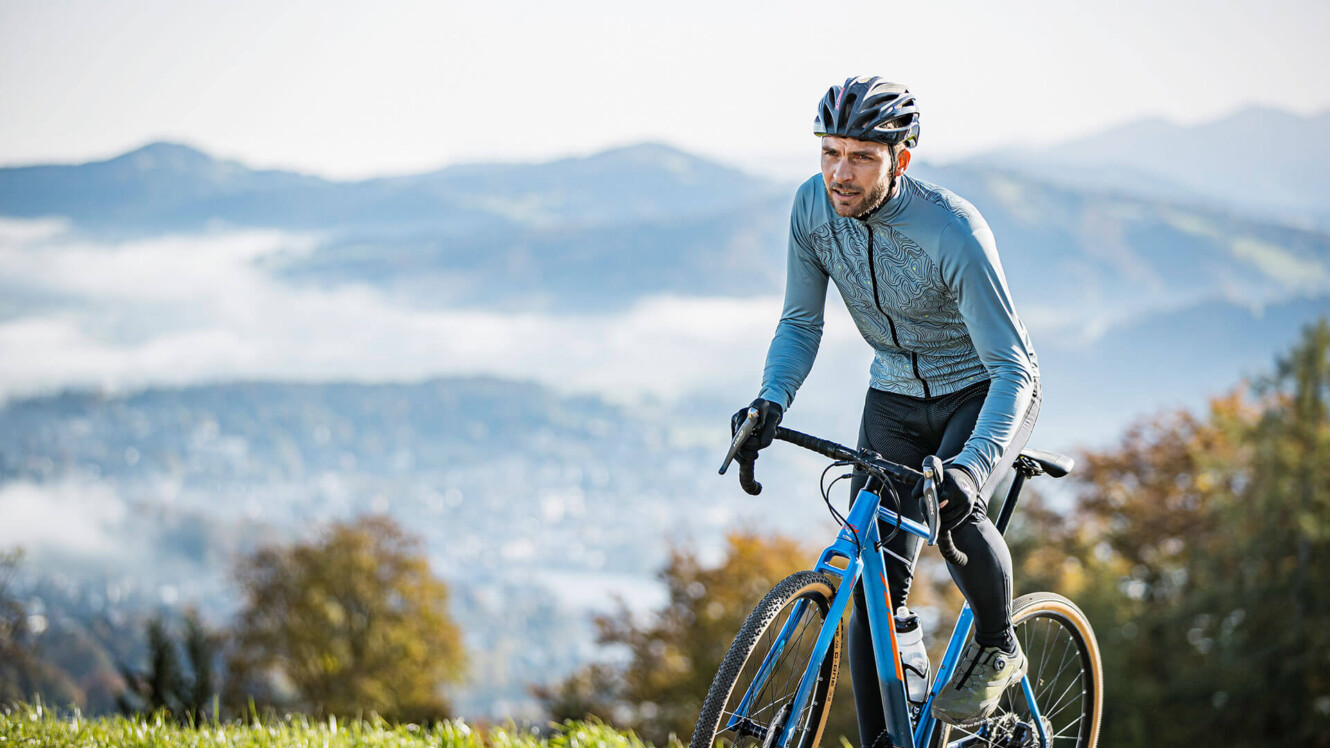
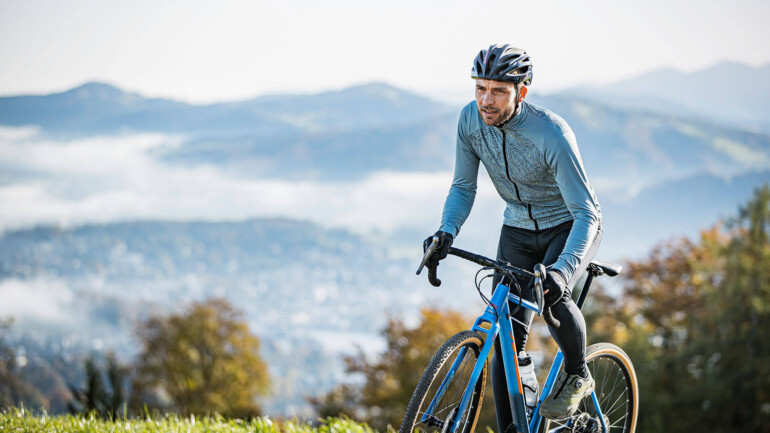
The outer shell protects against external conditions. For winter cycling, this is the layer that makes the biggest difference in comfort – because it controls the wind-chill effect.
Best for: Cold, dry days (0–8 °C) → Softshell cycling jacket (e.g. Airblocc). Windproof at the front, breathable at the back. This construction blocks headwind while allowing body heat and moisture to escape to the rear – exactly where the wind does not hit directly.
Best for: Wet, cold conditions (rain, sleet) → Rain jacket with membrane (WPM or GORE-TEX). Fully waterproof and windproof but less breathable than softshell. Therefore only use in actual rain or snow – in dry cold, softshell is the better choice.
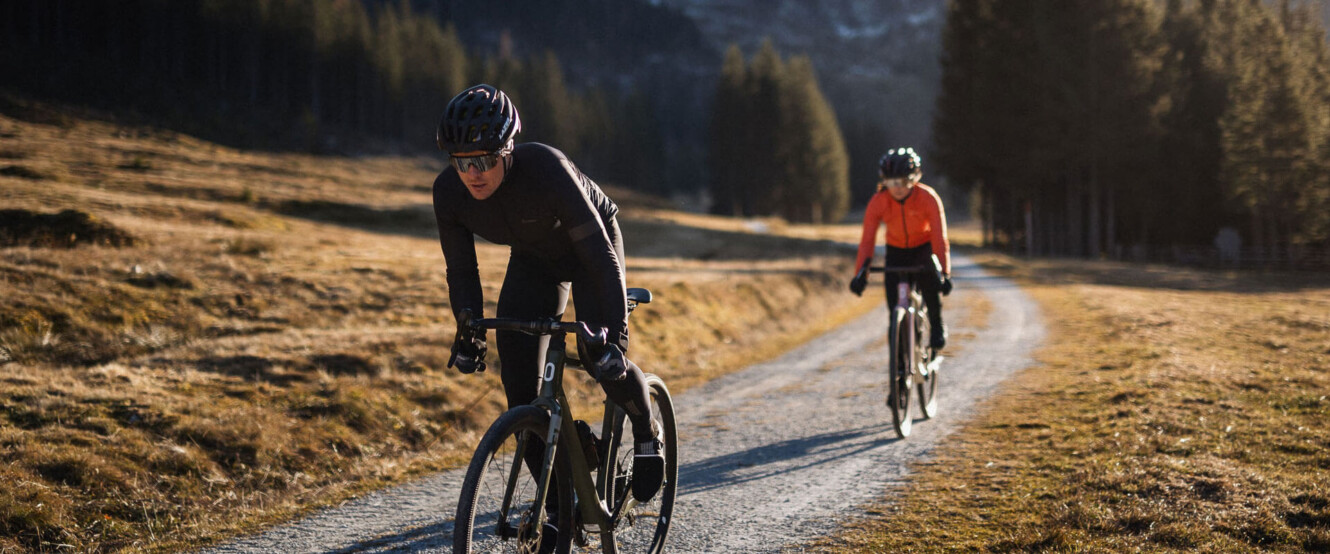
Best for: Variable conditions (alpine crossing, gravel) → Lightweight wind vest plus softshell jacket in the jersey pocket. The vest protects the torso from headwind, weighs under 100 g and takes up minimal space.
The Complete Temperature Matrix: What to Wear at Which Temperature?
This table shows proven layering combinations for cycling at different temperatures. Recommendations apply to medium intensity (base training, touring at 20–25 km/h average).
| Temperature | Base Layer | Midlayer | Outer Shell | Legs | Hands/Head/Feet |
|---|---|---|---|---|---|
| 10–15 °C | transtex® light (short sleeve) | — | Lightweight wind vest | Short cycling shorts or 3/4 tights | Light gloves, thin cap |
| 5–10 °C | transtex® light (long sleeve) | Long-sleeve cycling jersey | wind vest or light jacket | 3/4 tights or full-length tights | Gloves, headband, overshoes |
| 0–5 °C | transtex® warm (long sleeve) | Thermal cycling jersey | Softshell cycling jacket (Airblocc) | Bib Tights (windproof) | winter gloves, helmet liner, thermal overshoes |
| −5–0 °C | transtex® warm (long sleeve) | thermal cycling jersey | Softshell cycling jacket (Airblocc) | Thermo-Tights (Airblocc, windproof) | Lobster gloves, balaclava, neoprene overshoes |
| Unter −5 °C | transtex® Merino (long sleeve) | Fleece-Midlayer + Thermal jersey | Winterjacket (isulated, windproof) | Thermo-Tights (Airblocc) + transtex® underwear | Lobster gloves, balaclava, thermal socks |
Adjusting for intensity:
- High intensity (intervals, tempo rides): One layer fewer than listed or choose a thinner base layer. At a high heart rate, the body produces significantly more heat.
- Low intensity(easy spinning, commuting): One layer more or choose a thicker base layer. Slower speed generates less wind chill but also less body heat.
- If you get cold easily: Choose one warmth level higher across the board and invest in quality extremity gear (gloves, overshoes, headwear).
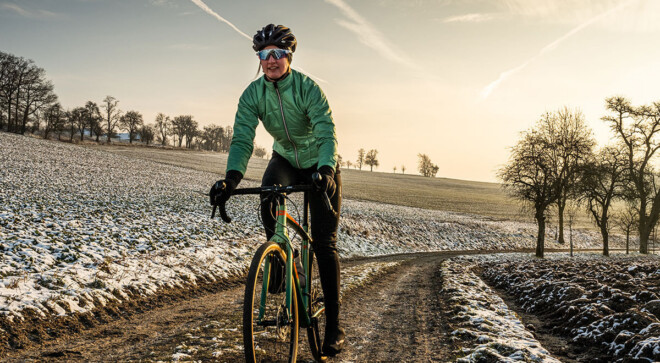
What makes Löffler winter cycling clothing different?
Own Knitting Facility – From Yarn to Finished Product
Löffler does not just produce clothing – it also makes the fabrics. The company’s own knitting facility in Ried im Innkreis develops and manufactures the performance fabrics for base layers, cycling jerseys and cycling shorts. This means every fibre, every knitting construction and every fabric finish is controlled in-house. Other brands buy fabrics from suppliers and can only influence their properties to a limited extent.
transtex® – Moisture Management for Endurance Sports
transtex® is not a trade name for a bought-in fabric but a fibre technology developed and produced by Löffler. The special knitting construction actively moves sweat from the skin surface outward. For the cycling base layer, this means you stay dry even when sweating heavily on a climb. As soon as the intensity drops, the body does not cool down.
Airblocc – Zonal Wind Protection Instead of Compromise
Airblocc materials are windproof at the front and breathable at the back. This zonal construction is developed specifically for cycling: headwind hits the body almost exclusively from the front. At the back, where there is no direct wind, heat and moisture can escape. The result: wind protection without heat build-up.
hotBOND® – Seamless Construction
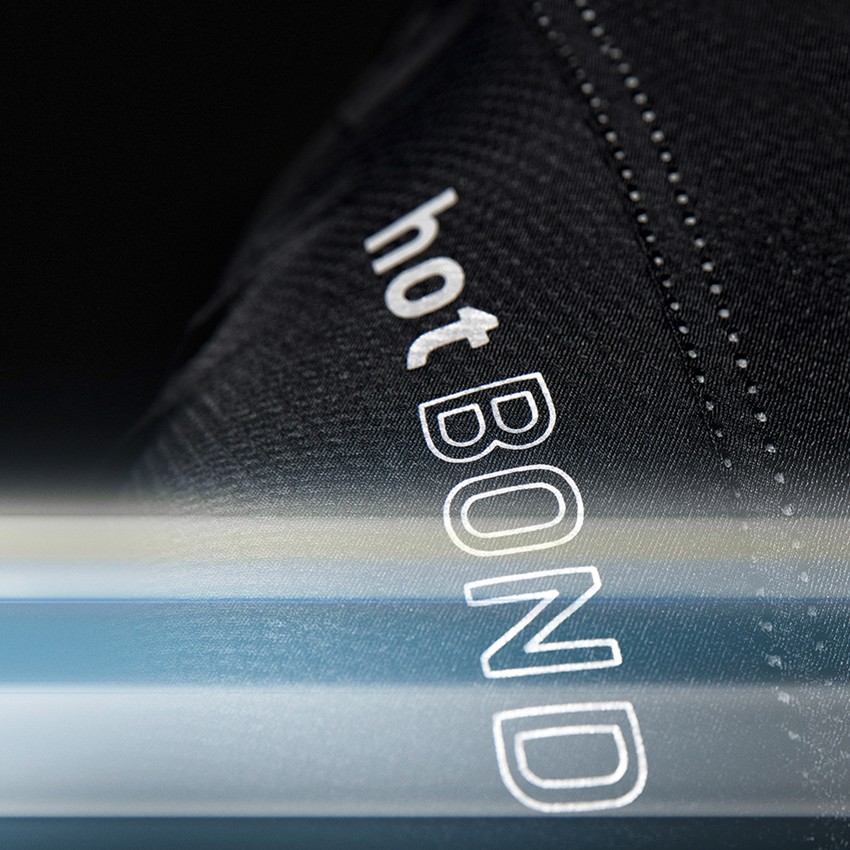
Particularly relevant for winter clothing: hotBOND® connections replace conventional seams with ultrasonically welded flat bonds. In winter, when multiple layers sit on top of each other, conventional seams cause pressure points more quickly. hotBOND® eliminates this problem.
OEKO-TEX® Standard 100 Certified
All Löffler materials have been continuously OEKO-TEX® Standard 100 certified since 1989 – proven free from harmful substances. This is particularly relevant for base layers worn directly on the skin and in contact with sweat during physical exertion.
Frequently Asked Questions
What to wear cycling at 5 degrees?
At 5 °C we recommend: transtex® light base layer (long sleeve) + long-sleeve cycling jersey + wind vest or lightweight softshell jacket. For the legs: 3/4 tights or full-length tights. Plus gloves, headband and overshoes. At high intensity (intervals), the base layer plus jacket without midlayer may be sufficient.
What to wear cycling at 0 degrees?
At 0 °C we recommend: transtex® warm base layer (long sleeve) + thermal cycling jersey + softshell cycling jacket (Airblocc, windproof front). For the legs: bib tights with windproof front panel. Plus winter gloves, helmet liner and thermal overshoes. Protect exposed areas (nose, chin) with a balaclava.
What to wear cycling in the rain in winter?
In rain below 10 °C: waterproof and windproof rain jacket over regular layering. Under the rain jacket, the standard layer system works – base layer plus midlayer. Important: a rain jacket is less breathable than a softshell jacket. In dry weather, always prefer softshell. For the legs: full-length cycling tights – in heavy rain, add rain overpants.
What is the best base layer for winter cycling?
That depends on intensity and temperature. For high intensity (heavy sweating), transtex® light or transtex® warm works best because synthetic fibres transport moisture fastest. For low intensity (easy riding, commuting), merino or the transtex® Merino hybrid works well because merino still insulates when damp and neutralises odour.
Is merino or synthetic better as a cycling base layer?
Both have strengths in different situations. Synthetic (transtex®) dries faster and is better suited for intense sessions with heavy sweating and rapid pace changes. Merino insulates when damp, neutralises odour and suits longer rides at lower intensity. The transtex® Merino hybrid combines both advantages for moderate intensities and variable conditions.
Do I need different cycling shorts in winter than in summer?
Yes. Summer cycling shorts are made from thin, maximally breathable material without wind protection. Winter cycling shorts (bib tights, thermal tights) use thicker performance fabrics with a brushed inner surface and often a windproof front panel. Below 8–10 °C, switch to full-length tights. Below 0 °C, we recommend windproof Airblocc tights.
How do I stop my hands and feet freezing when cycling?
Hands: switch to winter gloves below 5 °C, lobster gloves below 0 °C (two fingers share a compartment = more warmth than individual fingers). Feet: wear thermal overshoes over your cycling shoes. They block the headwind that enters through the ventilation openings. Additionally: thermal socks with a transtex® component for fast moisture transport.