On this page
- Which cycling pants are best for you?
- Women’s cycling shorts by use
- What makes Löffler cycling pants different?
- Cycling pants women: Which model for which temperature?
- Cycling pants with straps or without?
- Typical mistakes when buying cycling pants
- Care: Extending the life of your cycling pants
- Frequently Asked Questions
1. Which cycling pants are best for you?
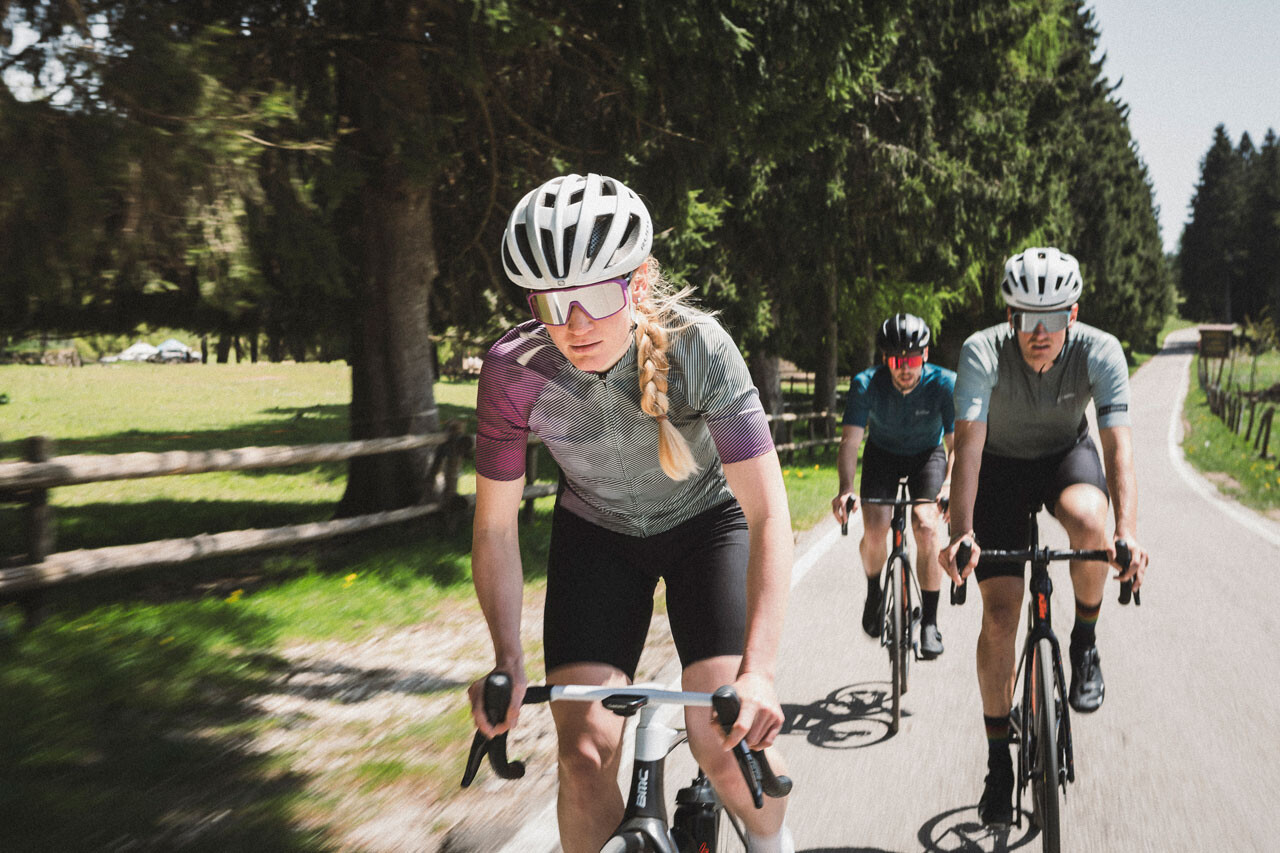
The right choice depends on three factors: temperature, intensity of the ride and length of the route. Cycling pants that are suitable for an after-work ride at 25 °C are the wrong choice for a cross-Alps ride at 5 °C. The following overview shows which type of pants is best for which conditions.
1.1. Overview of cycling pants
| Type of pants | Temperature | Best for | Seat pad | Straps |
|---|---|---|---|---|
| Short cycling pants | 15–35 °C | Summer rides, after work rides, MTB | ✔ | — |
| Bib tights short | 15–35 °C | Long road bike tours, gravel, races | ✔ | ✔ |
| 3/4-cycling pants | 8–20 °C | Shoulder season (spring & autumn) | ✔ | — |
| Bib tights long | −5–10 °C | For winter training, cold conditions | ✔ | ✔ |
| Thermo tights (Airblocc) | −10–5 °C | Very cold days, windproof protection | ✔ | — |
| Cycling undershorts | all-season | Base layer for commuting, touring | ✔ | — |
1.1. Radhosen-Typen im Überblick
2. Womens’s cycling pants by use
2.1. Best cycling shorts for summer rides and warm days (above 15 °C)
In warm weather, breathability is essential. Anyone who overheats on long rides loses both performance and comfort. Löffler summer cycling pants use lightweight, elastic functional fabrics that quickly wick sweat away from the body and dry within minutes.
Best suited for: Summer rides over 2 hours:
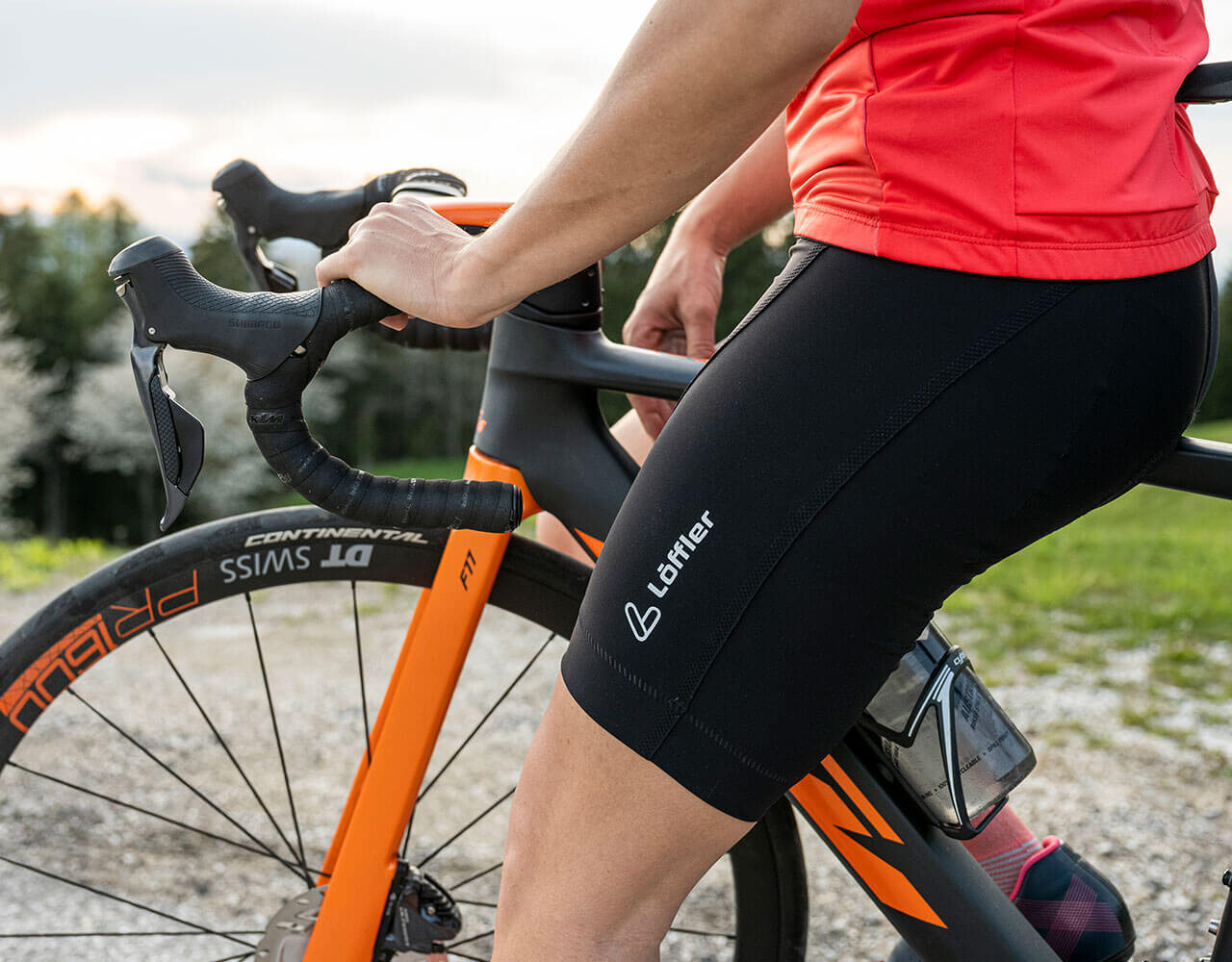
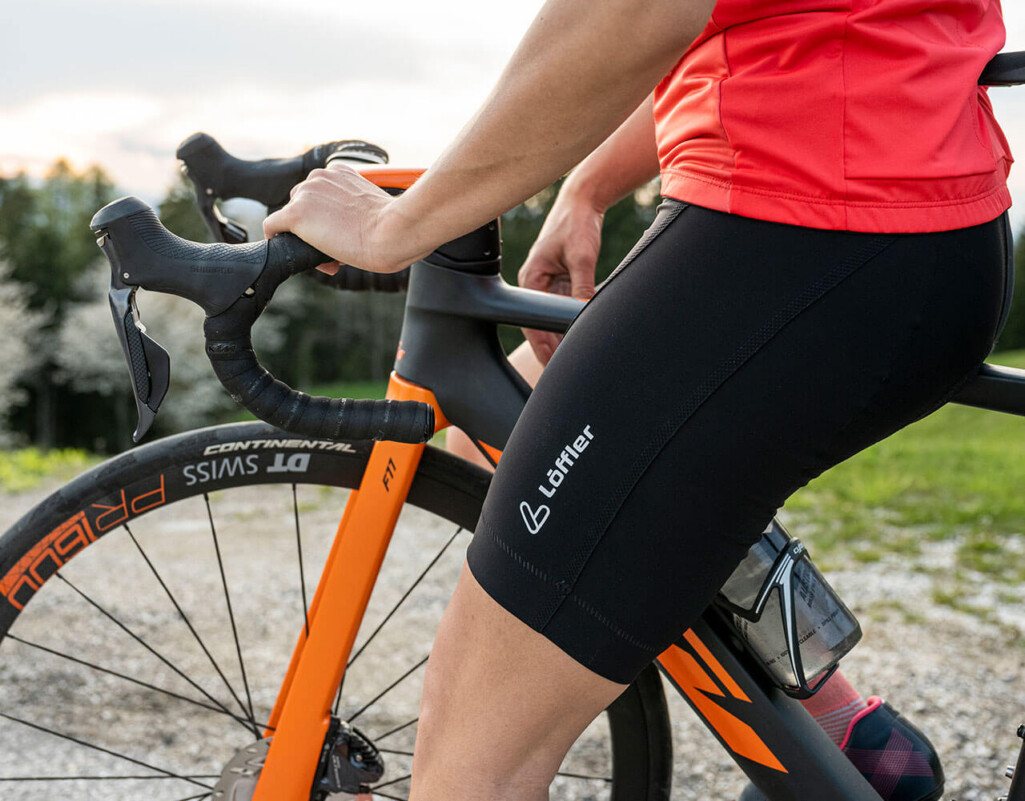
A pair of cycling pants or bib pants with the Comfort Gel Air seat pad. The padding provides 16 mm of cushioning at the sit bones without adding bulk. For performance-oriented riders in a more forward riding position, bib pants are the better choice, as they do not cut into the waist and stay securely in place during movement.
Best suited for: Short rides under 1 hour:
Cycling undershorts worn under regular sports clothing are sufficient. The transtex® light material quickly transports moisture to the outside and dries significantly faster than cotton.
2.2. Best cycling pants for cold and changing conditions (below 10 °C)
Cold conditions require more than just thicker materials. The challenge is to stay warm without overheating on climbs. Löffler solves this problem with Airblocc technology: the front panel provides windproof protection against cold airflow, while the back uses breathable material to release excess heat.
Best suited for: Winter training at 0–10°C: Airblocc thermal tights with a windproof front. Combined with a transtex® base layer, this creates a layering system that wicks moisture away from the body while providing insulation.
Best suited for: Changing alpine conditions: Long bib tights plus a lightweight wind vest. This setup can be quickly adjusted when temperatures vary by 10–15°C between valley and mountain pass.
2.3. Best cycling pants for gravel and offroad
Gravel riders need cycling pants that remain comfortable over long distances and changing terrain. This means: more freedom of movement than road cycling tights, more durable materials than classic bike shorts, and a seat pad that does not cause pressure even after 4+ hours on gravel.
Best suited for: Gravel rides over 3 hours: The Löffler SKYS Gravel collection is modular in design and made for changing conditions – from asphalt to gravel to forest trails.
3. What makes Löffler cycling pants different?
3.1. hotBOND® – seamless connection without needle & threat
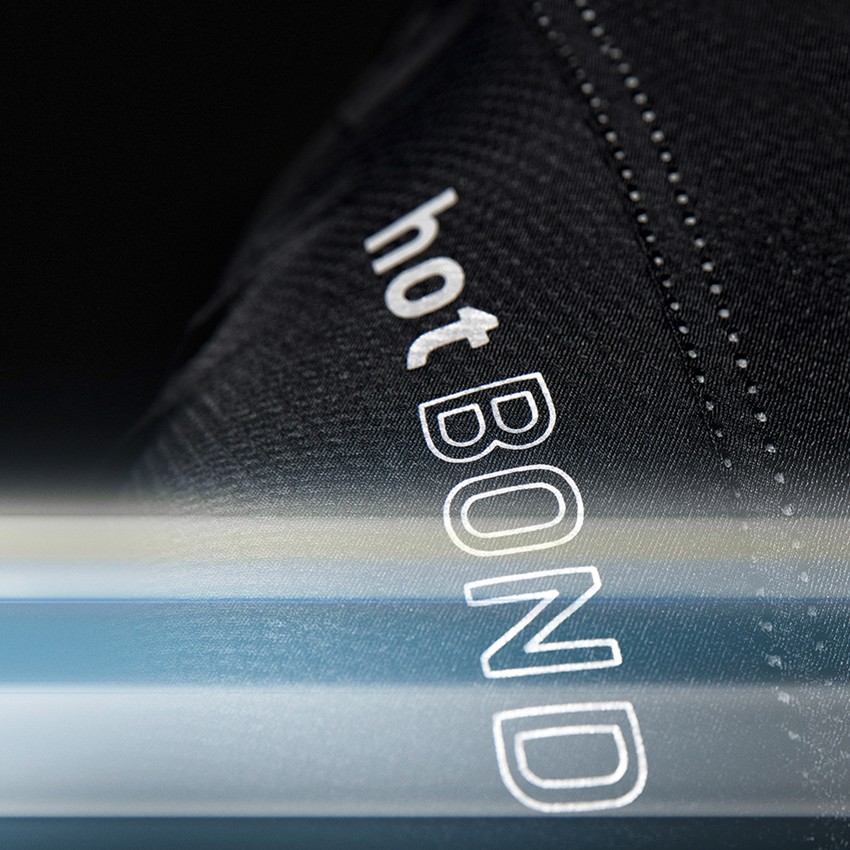
Löffler has developed hotBOND®, a technology that replaces conventional seams with ultrasonic welded flat bonds. The result: no pressure points, no chafing – even after hours in the saddle. They are also extremly tear-resistant and durable than sewn seams. The hotBOND® technology is exclusively manufactured at the Löffler headquarter in Ried im Innkreis, Austria.
3.2. transtex® – the smart air conditioning system by Löffler
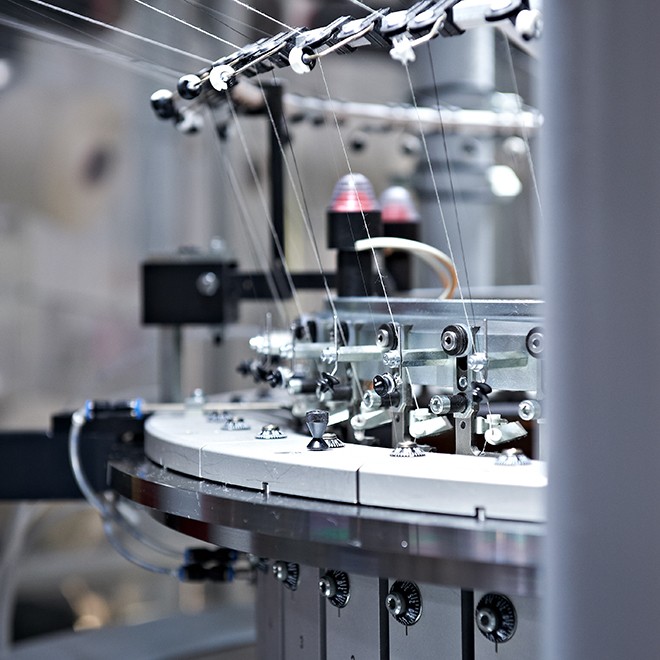
transtex® is a functional fiber developed in Löffler’s own knitting facility that transports sweat away from the skin faster than conventional materials. During high-intensity activity – such as climbs or interval training – transtex® helps prevent cooling caused by wet base layers. For cycling pants, this means: the transtex® lining in the kidney area protects against cooling, friction, and chafing.
3.3. Seat pad – anatomically designed for women
Every Löffler seat pad is specifically designed for the female anatomy. The Comfort Gel Air pad combines shock-absorbing gel inserts in the sit bone area with a highly breathable construction that ensures a dry and comfortable seating experience even on long rides.
For performance-oriented female riders in a more forward-leaning position, we offer the SQlab-XP/6 Pro, which is designed to specifically relieve pressure on sensitive areas.
4. Women’s cycling pants: which model for which temperature
| Temperature | Intensity | Recommended setup |
|---|---|---|
| Above 25 °C | High (Intervals, racing) | Short bib pants, transtex® light+ base layer |
| 15–25 °C | Moderate (touring ride) | Cycling pants or bib pants, lightweight jersey, transtex® light base layer |
| 8–15 °C | Moderate to high | 3/4 cycling pants or bib pants + leg warmers, transtex® hybrid base layer |
| 0–8 °C | Moderate (base endurance training) | Bib tights + transtex® warm base layer + wind vest |
| Below 0 °C | Low to medium | Airblocc thermal tights + transtex® merino base layer + winter jacket |
Important: These recommendations are guidelines only. Individual sensitivity to cold varies significantly. Riders who get cold quickly should choose a warmer option. Those riding at high intensity and sweating heavily are better off choosing lighter cycling pants and investing in a high-quality base layer that quickly wicks moisture away from the body.
4. Radlerhose Damen: Welches Modell bei welcher Temperatur?
5. Bib pants or cycling pants without straps?
This decision depends on your riding position and personal comfort.
Bib pants (with straps) are the best choice if you ride in a sporty, forward-leaning position. The straps keep the pants securely in place, the waistband cannot dig in, and the pants do not slip down at the back. Many road and gravel riders prefer bib pants for rides longer than 2 hours.
Cycling pants without straps are better suited for more upright riding positions – for example on touring bikes, city bikes, or e-bikes. They are easier to put on and take off and feel less restrictive during relaxed rides.
| Bib Shorts (with straps) | Cycling pants without straps | |
|---|---|---|
| Best riding position | Sporty, aerodynamic position | Relaxed, upright position |
| Best for | Road cycling, gravel, long rides | Touring bike, MTB, commuting |
| Support | Stays in place, no digging at the waistband | Elastic waistband, easy on and off |
| Tour length | Ideal for rides from 2 hours and up | Ideal for short rides |
5. Trägerhose oder Radhose ohne Träger?
Diese Entscheidung hängt von der Sitzposition und dem persönlichen Komfort ab.
Bib Shorts (mit Trägern) sind die beste Wahl, wenn du sportlich und vorgebeugt auf dem Rad sitzt. Die Träger halten die Hose in Position, der Bund kann nicht einschneiden, und die Hose verrutscht nicht am Rücken. Viele Rennrad- und Gravel-Fahrerinnen bevorzugen Bib Shorts für Touren über 2 Stunden.
Radhosen ohne Träger eignen sich besser für aufrechte Sitzpositionen – etwa auf dem Tourenrad, City-Bike oder E-Bike. Sie sind einfacher an- und auszuziehen und fühlen sich bei lockeren Ausfahrten weniger einengend an.
6. Common mistakes when buying cycling pants
- Wearing regular underwear under cycling pants. Cycling pants and cycling undershorts are designed to be worn directly on the skin. Additional underwear creates folds that can lead to chafing under load. The seat pad is designed to work best without any additional layer directly against the skin.
- Choosing a seat pad that is too soft. Thicker padding does not automatically mean more comfort. A seat pad that is too soft can compress under load and then provide less cushioning than a firmer, thinner pad. The right level of padding firmness depends on your saddle, riding style, and the width of your sit bones.
- Buying the wrong size. Cycling pants must fit snugly so the seat pad stays exactly in the correct position. Pants that are too large will shift and cause exactly the problems they are meant to prevent. When in doubt, it is better to choose one size smaller.
7. Care: How to make your cycling pants last longer
Cycling pants are technical garments made from sensitive materials. Proper care helps preserve both elasticity and the cushioning performance of the seat pad for many years.
Wash your cycling pants after every ride on a gentle cycle at a maximum of 40 °C (104 °F). Do not use fabric softener, as it clogs the material’s pores and reduces both breathability and pad performance. Air-dry the pants instead of using a tumble dryer.
8. Frequently Asked Questions
Which cycling pants are best for long rides?
For rides longer than 3 hours, bib shorts are the best choice. They do not slip, do not dig into the waistband, and provide lasting cushioning at the sit bones with the Comfort Gel Air seat pad. For cold conditions, long bib tights are the better option.
Which women’s cycling pants are suitable at 10 °C?
At 10 °C, we recommend 3/4-length cycling pants or long bib tights combined with a transtex® base layer as the first layer. At high intensity (intervals, climbs), 3/4-length pants are often sufficient; at lower intensity (base training), long tights with a windproof front are the better choice.
What is better – cycling pants or cycling undershorts?
Cycling pants (bib shorts, tights) offer maximum performance on the road bike or gravel bike, as they are designed as an outer layer and are optimized for aerodynamics and function. Cycling undershorts are worn under regular clothing – ideal for commuting, touring riders, or e-bike use when you don’t want to wear dedicated cycling apparel.
What do you wear under cycling pants?
Nothing. Cycling pants and cycling undershorts are designed to be worn directly on the skin. The seat pad is engineered to provide the best comfort and moisture management without any additional layer. Regular underwear creates folds and can lead to chafing.
Why are Löffler cycling pants more expensive than discount models?
Löffler cycling pants are developed and produced in the company’s own knitting facility in Ried im Innkreis, Austria – from yarn to finished product. Technologies such as the seamless hotBOND® construction and transtex® moisture management are proprietary developments that are not used in any other cycling pants. In addition, they carry OEKO-TEX® Standard 100 certification and are manufactured in Austria and Europe under fair working conditions.
Which cycling pants for seat discomfort?
Seat discomfort on the bike almost always has multiple causes: incorrect saddle height, padding that is too hard or too soft, and using a seat pad that does not match your sit bone width. As a solution, we first recommend having your sit bone width measured at a specialist retailer. Then choose the correct padding firmness – the Comfort Gel Air seat pad is suitable for touring cyclists, while the SQlab-XP/6 Pro is designed for sporty riding positions.