
Cycling in Winter: Safety & Visibility
Winter cycling is all the rage. With less snow, it has increasingly established itself as a year-round sport.
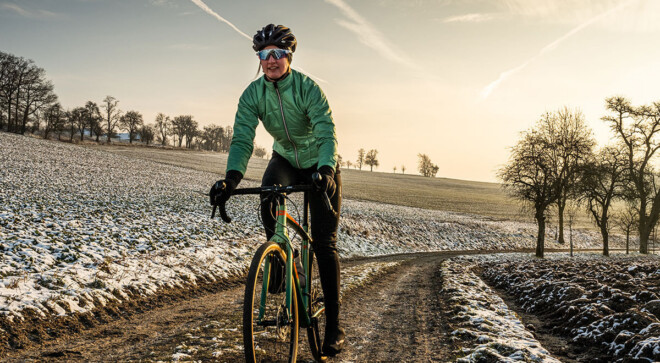
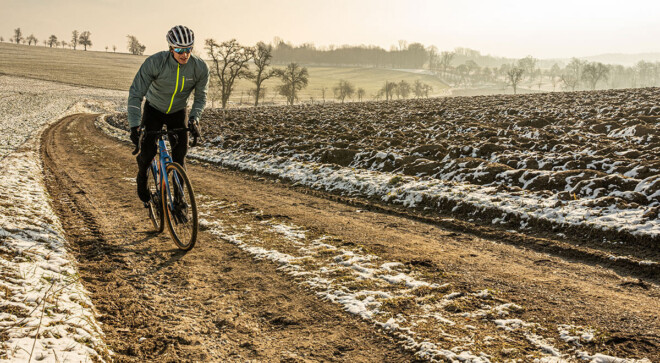
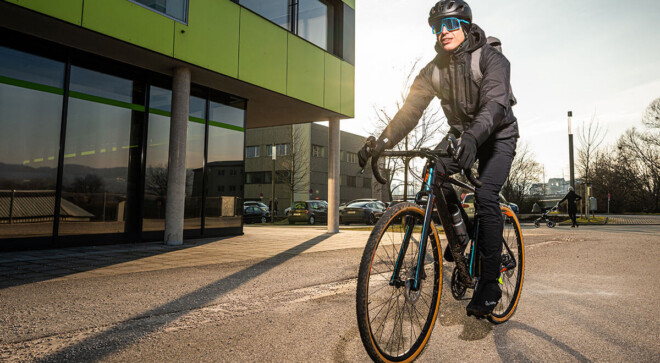
Cycling apparel for the cold season is typically made of thin materials that regulate body temperature, protect against the wind, and ensure visibility at night or in bad weather. It’s not just for cyclists who want to train outdoors year-round, but also for people who don’t want to give up their bike as their primary mode of transportation, even during the cold season.
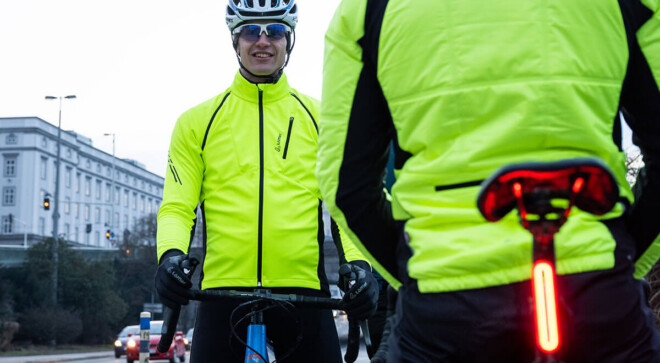
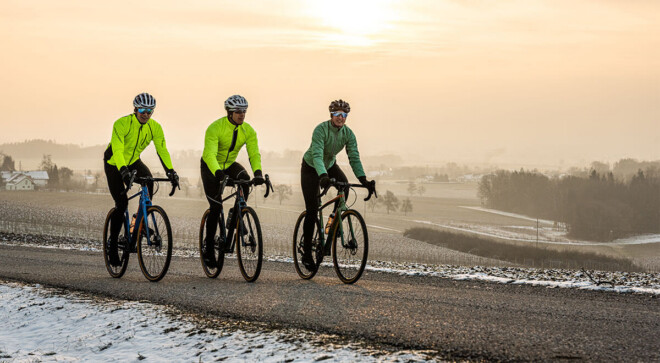
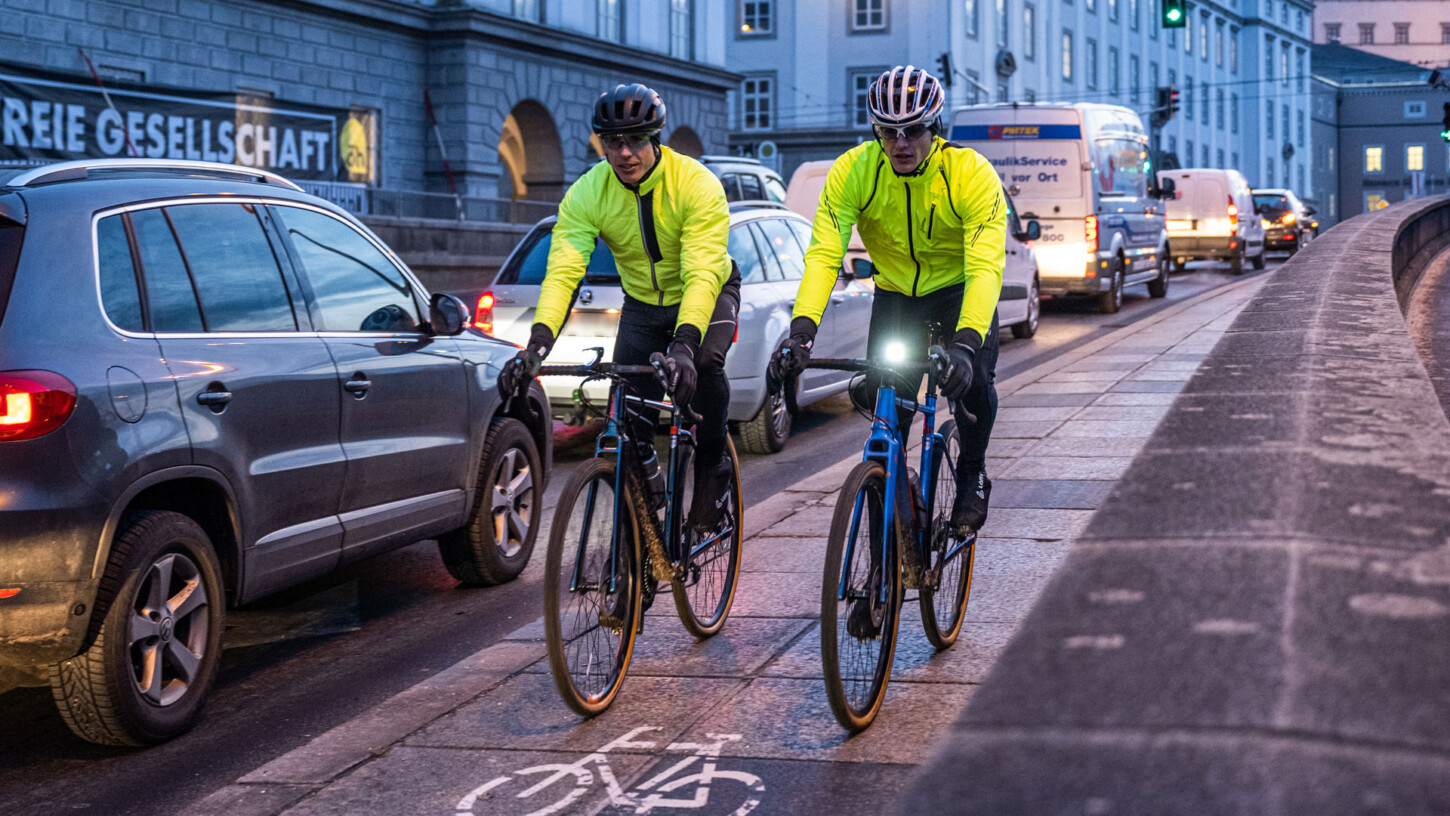
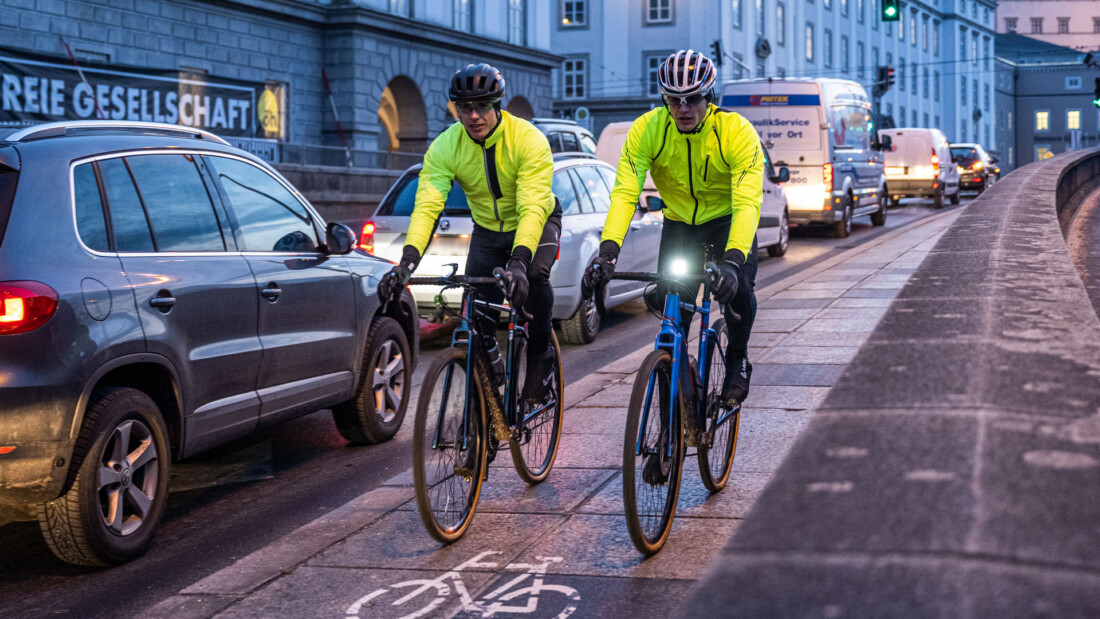
The new winter cycling collection promises insulation and visibility thanks to neon colors and reflective elements.
We offer cycling shorts, jerseys, and jackets designed to meet the highest standards of quality, functionality, and visibility. Find the right cycling apparel for winter at your local Löffler retailer.
What sets Löffler apart?
Our top 3 reasons why you should choose Löffler winter cycling apparel.

Own knitting department
Since 1981, cycling apparel has been developed and produced in collaboration with top athletes. The fabrics used are largely sourced from our own knitting mill in Ried im Innkreis.

Consistent, rigorous quality control
After each production step (knitting, finishing, cutting, sewing), the fabrics undergo rigorous inspection. At the end of the production process, the finished product undergoes another round of strict quality control.

We manufacture in Austria/Europe
Our products are manufactured in Austria and Europe, primarily in our own facilities in Austria and Bulgaria. Our cycling jerseys are 100% made in Ried im Innkreis—from the yarn to the finished product.
Responsibility, quality, innovation—that’s what Löffler stands for. We develop high-quality apparel for endurance sports. That’s what we stand for.
OEKO-TEX®
Proven to be free of harmful substances. This is confirmed by certification under Standard 100 by OEKO-TEX®. Our materials are free of substances that are harmful to the environment and human health. We have had our clothing certified by OEKO-TEX® consistently since 1989. Naturally, our current winter cycling apparel is therefore OEKO-TEX® Standard 100 certified.
The Roadbike Podcast with LÖFFLER Product Manager Dominique Roshardt
What will it be like in the fall?
You can find a free guide on this topic at bussgeldkatalog.org: Cycling in the Fall: Tips and Tricks.
What kind of cycling clothing is best for winter? We’ve got the tips!
What cycling gear should I wear for different temperatures? How do I dress properly for winter training? If you’ve asked yourself these or similar questions, then this section is just right for you. Here you’ll find answers to the most common questions about winter cycling.
Do I even need different cycling clothes in the winter than in the summer?
Good cycling clothing for summer is definitely different from good cycling clothing for winter. Generally speaking, the materials used for summer clothing are different. They are thinner and designed for maximum breathability.
In winter, cycling clothing is often made from thicker materials. The material is often brushed on the inside. Above all, insulation, wind resistance, and functionality play a crucial role.
In winter, the peak of the cycling season is over. This means that high-intensity training is largely complete. For particularly sweaty workouts in winter, you can of course fall back on your summer wardrobe. On the other hand, you’ll need an outer layer to protect you from the prevailing weather conditions.
In winter, rides become more leisurely and shorter. Therefore, we definitely recommend wearing multiple layers. This allows you to remove a layer or two as needed or to ensure ventilation.
You should definitely protect your hands, head, and feet, as these are the first to get cold. So remember: don’t forget gloves, a hat, and overshoes.
What should I wear under my cycling jacket in the winter to stay both dry and warm?
Dress like an onion! This tip is something you should take seriously. After all, an onion has many layers that build up from the inside out. That’s exactly how you should choose your clothing for winter outings. Here you’ll find everything you need to know about the layering principle.
Special attention should be paid to the underwear you wear as your first layer. Our functional underwear is made from a material that wicks moisture away from the body particularly quickly. This is achieved through a special knitting technology we developed ourselves: transtex. The underwear is available in different warmth levels, so there’s the right option for every temperature and every individual’s sensitivity to the cold.
In addition, we recommend wearing a cycling jersey as a midlayer. Whether this should be thinner or thicker (long-sleeved or short-sleeved) depends on your own temperature sensitivity and how fast or slow you’re riding. Do you sweat a lot and quickly? Then we recommend a thinner jersey. Do you tend to get cold easily? Then we recommend a jersey made of thicker material.
It’s generally important that your clothing is breathable and doesn’t trap moisture, but instead quickly wicks it away to the outer layer.
The outermost layer should be a jacket that provides good protection against the weather. If you’re riding fast, a windproof material is recommended. For more warmth and comfort, we recommend jackets and vests with insulating materials such as PrimaLoft®.
Another factor to consider is the type of bike you’re riding. Planning a longer ride on a road bike? On a road bike, you’ll generally travel faster than on a touring bike (more wind resistance). However, you’ll usually work up a sweat (thinner base layer) compared to a leisurely ride. With an MTB, the situation is different. Sweaty climbs alternate with rapid descents. However, you’ll be slower than on a road bike. Here, we recommend bringing a change of clothes for your MTB so you can quickly put on a new layer after the climb. Alternatively, you can also pack a windproof jacket in your backpack to prevent the chill-out effect during the descent.
Is there anything in particular I need to keep in mind when riding my e-bike in the winter?
In general, you’ll travel faster on an e-bike than without a motor, and you’ll expend less physical energy—which means you’ll generate less body heat than when riding without a motor. That’s why it’s especially important to wear warm clothing. Above all, don’t underestimate the wind chill. If the outside temperature is already in the single digits, you can subtract another 5–10 degrees to account for the wind chill. Without the right clothing, it will quickly become uncomfortable.
Our rule of thumb: It’s better to wear one extra layer than one too few. When you step outside in your outfit, you shouldn’t feel chilly. Then you’re dressed just right for your e-bike ride. Tip: On bitterly cold days, opt for extra-warm underwear (merino wool). Our underwear quickly wicks sweat away, while the merino wool keeps you nice and warm and provides excellent insulation even in bad weather.
What does the perfect winter cycling gear look like?
The perfect winter cycling gear is tailored precisely to your needs. Since how we perceive temperature can vary greatly from person to person, it’s difficult to make a blanket statement here. As a general rule, you should dress according to the layering principle. This means wearing several coordinated layers that you can add or remove as needed. The layering principle has already proven itself in many winter endurance sports and can be applied to cycling without hesitation. We can offer you the following tips based on our experience:
Wear thermal socks
If you’re particularly sensitive to the cold, switch to cycling shoes designed specifically for winter conditions.
Use overshoes that are suitable for the weather. There are various models available made from Gore-Tex Active (for cold and wet conditions), neoprene (when it’s really cold), and PrimaLoft® (if you’re out in freezing cold for a long time or for e-bike rides)
Wear long cycling tights or thermal leg warmers. For quick rides (on an e-bike), there are models with a built-in Windstopper® membrane that provide excellent protection for sensitive areas of the body against the wind.
Use the layering principle: a functional base layer, a warm cycling jersey over it, and a functional cycling jacket as the outer layer are ideal.
A scarf, beanie, or headband offers additional protection.
Your hands get cold quickly. Use functional gloves to maintain your body temperature.
Switch to thicker shoes to protect your feet. Many manufacturers now offer winter cycling shoes, even for road bikes.
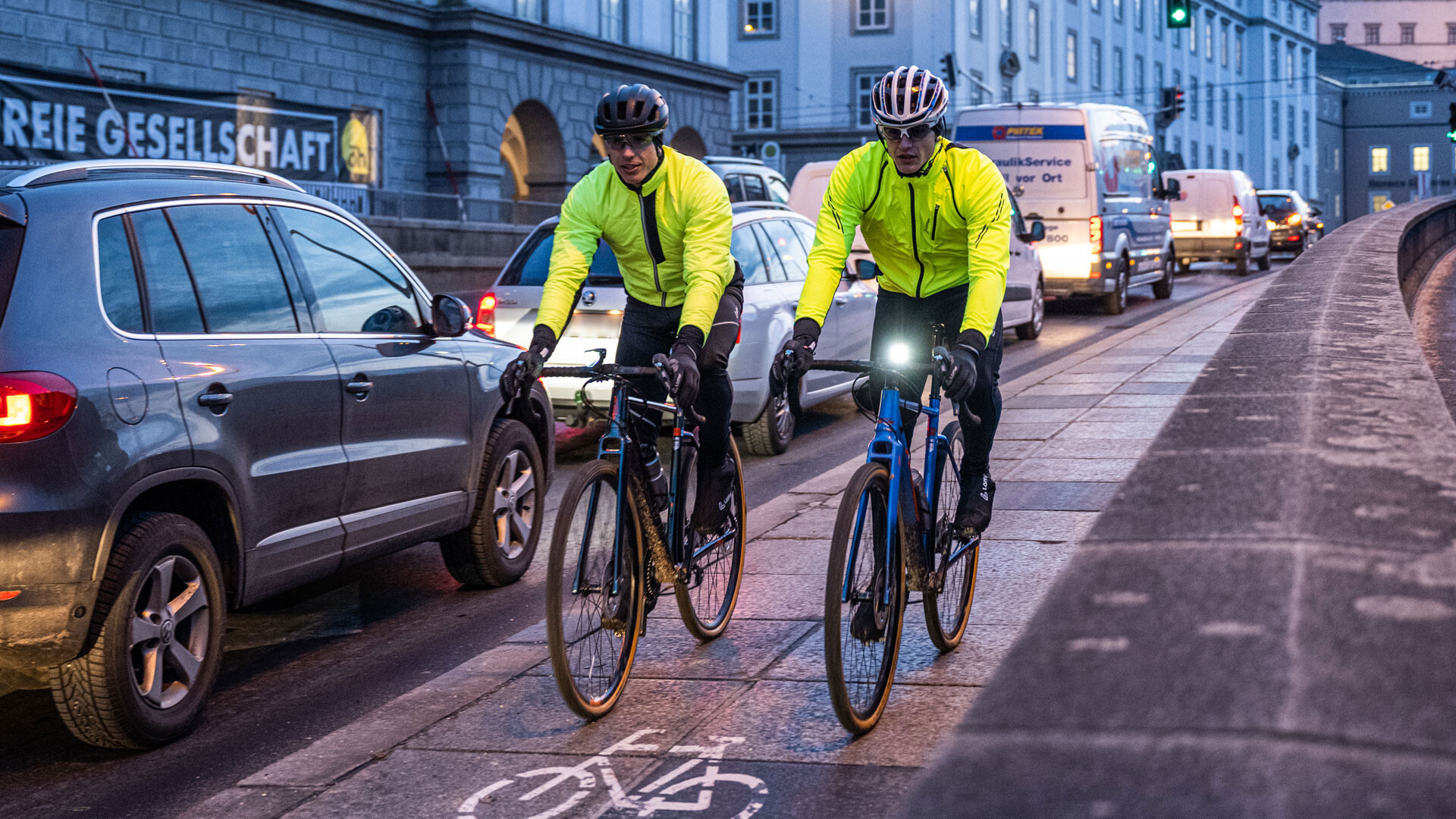
When cycling in winter, the rule is: less fashion, more function! When choosing your clothing, you should focus less on current fashion trends and more on high visibility. Reflectors and bright colors ensure that you are clearly visible.
Greater visibility and comfort thanks to hotBOND® reflective
Using our proven hotBOND® reflective technology, we bond highly elastic materials together using ultrasonic welding. Thanks to a special manufacturing process, these areas reflect light when illuminated. For tights and shirts, this means no seams that pinch, chafe, or stand out! This technology is used not only in jerseys but also in cycling shorts.