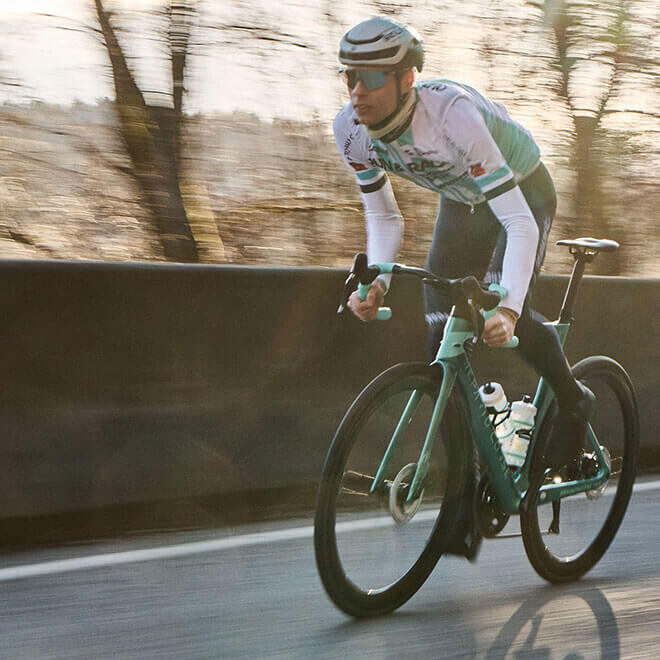
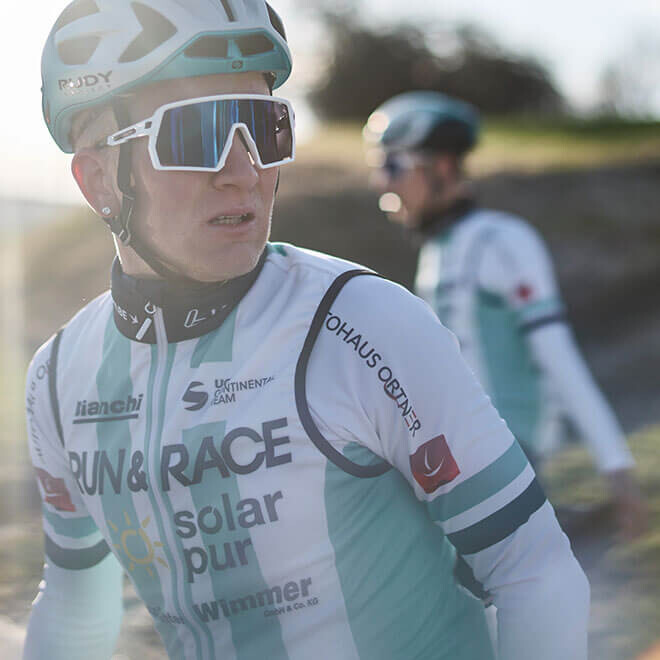
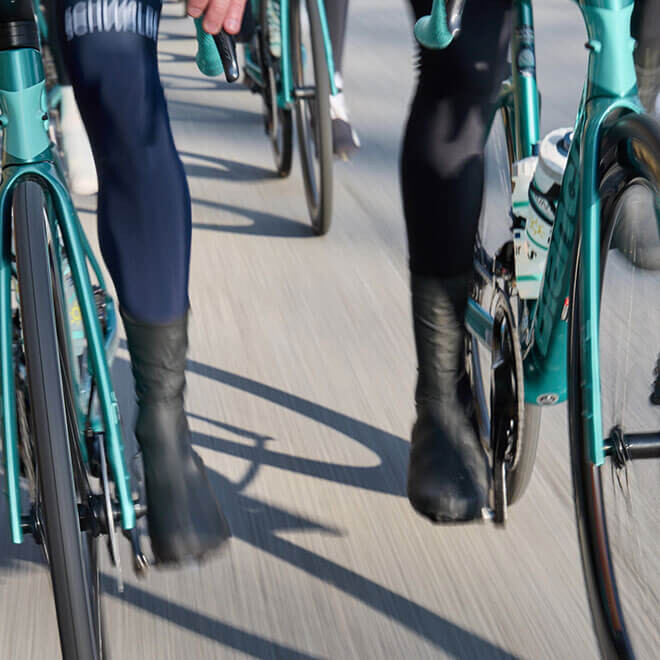
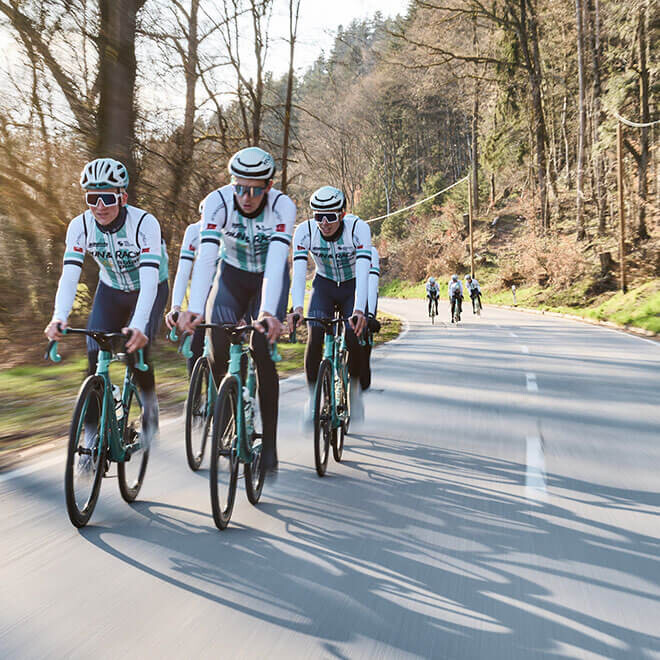
Road cycling kit for a cold start and a warm afternoon

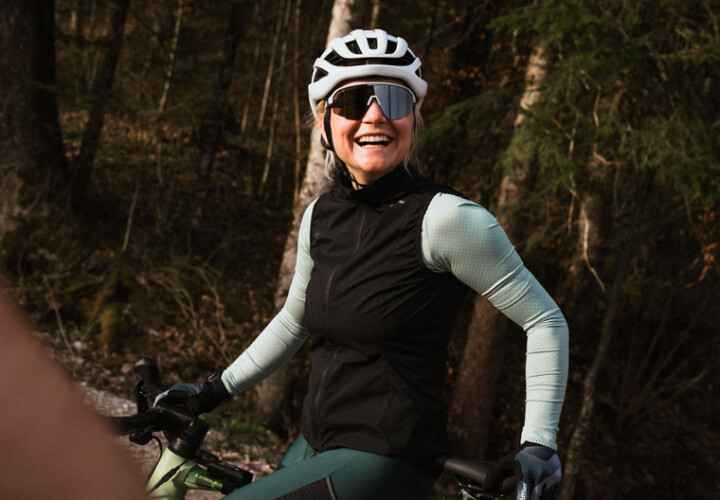
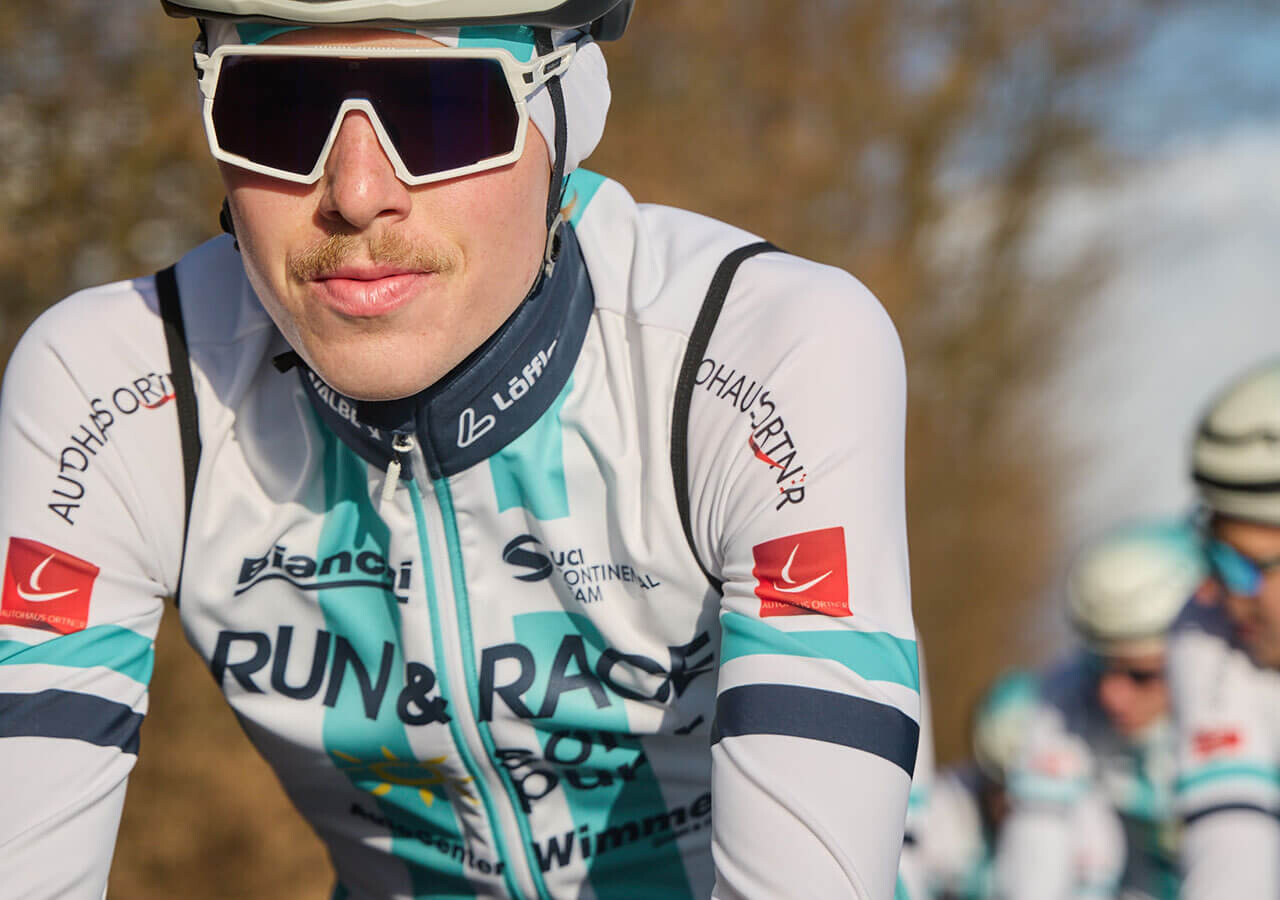
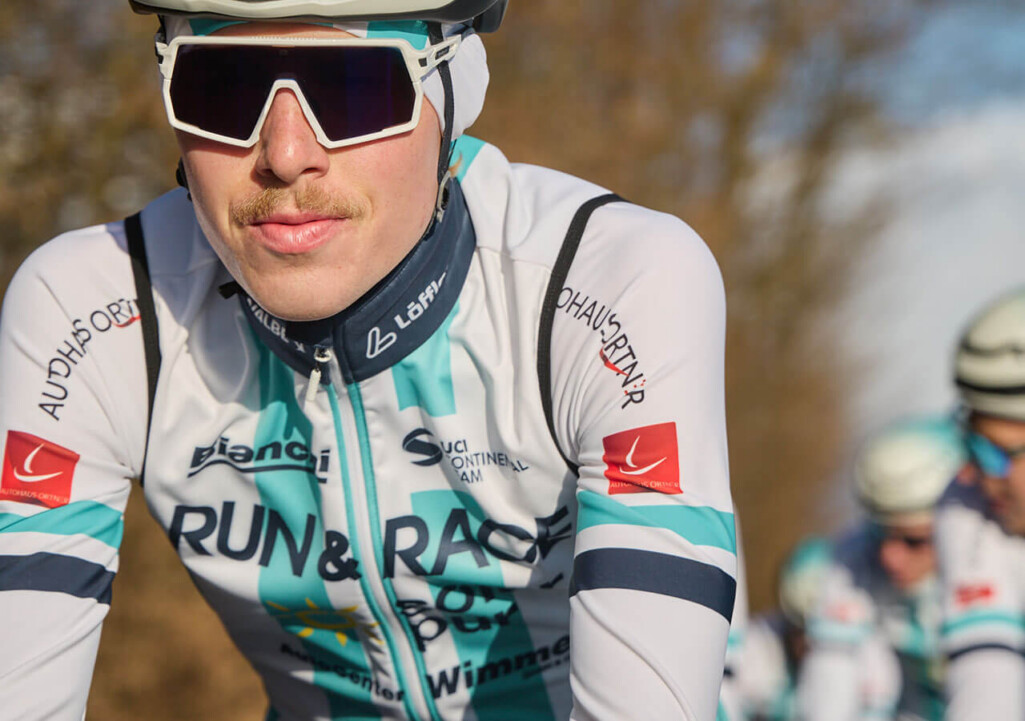
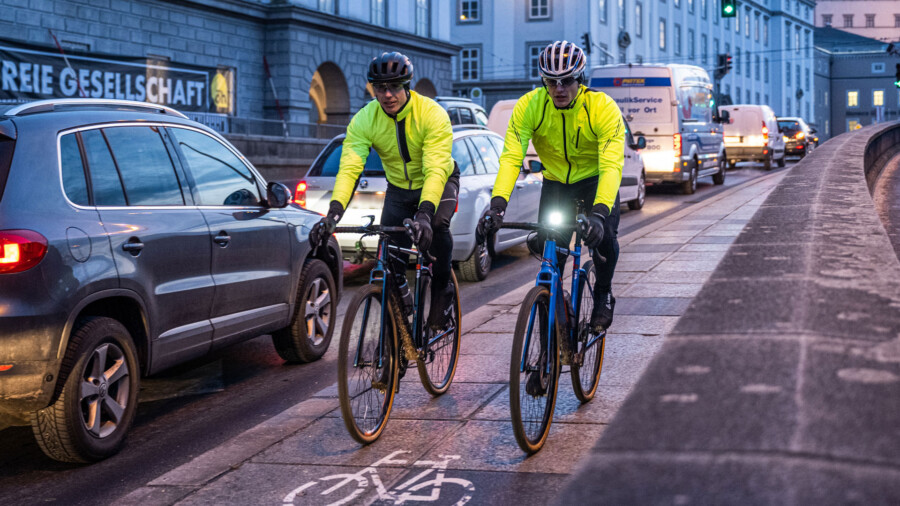
On long days in the saddle, you’ll ride with a base layer (short-sleeved jersey, cycling shorts) and additional layers you can take off: arm warmers, leg warmers and a windproof vest. Whatever you need in the morning to stop yourself getting cold must fit into your jersey pocket by the afternoon, without you having to stop and change.

LÖFFLER designs and manufactures road cycling clothing in Ried im Innkreis, Austria – for road cyclists who ride in changeable conditions, from early morning rides in 5-degree weather to warm afternoons. The transtex® and Airblocc technologies are designed to ensure that a single clothing system covers the entire temperature range.

Decision logic based on temperature trend

The rule: the greater the difference between the morning and afternoon temperatures, the more layers need to be fully removable – not just openable. A full-zip jersey can be opened for ventilation, but it can’t be tucked into your pocket. Arm warmers, leg warmers and a vest can.

  • Starting at below 8 °C, rising to over 15 °C in the afternoon (a big jump) → Short-sleeved jersey + thermal leg warmers + thermal arm warmers + AB Light cycling vest. All three extra layers are taken off one by one as soon as the sun comes out and the chill has gone from my legs.
  • Morning 8–12 °C, afternoon 18–22 °C (moderate rise) → Short-sleeved jersey + Elastic arm warmers + AB Light or Windshell cycling vest. Leg warmers are usually not necessary here, as your legs generate enough heat of their own whilst pedalling.
  • Start 12–16 °C, rising to over 22 °C in the afternoon (a slight rise)→ Short-sleeved jersey + Elastic arm warmers. A vest can be kept in the jersey, but is often not needed at all – just put it on for descents or when you’re riding with the wind in your face on open stretches of road.
  • No significant change; consistently below 15 °C → There’s no point in changing clothes here. A long-sleeved jersey and an AB Light bike vest stay on all day. Taking off fewer layers means less faffing about whilst out on a ride.
start temperature afternoon temperature change setup
below 8 °C above 15 °C big Short-sleeved jersey + thermal leg warmers + thermal arm warmers + AB Light cycling vest
8–12 °C 18–22 °C medium Short-sleeved jersey + Elastic arm warmers + AB Light / Windshell cycling vest
12–16 °C above 22 °C small Short-sleeved jersey + Elastic arm warmers, vest only in the bag
consistently below 15 °C no change no change Long-sleeved jersey + AB Light cycling vest, no change of kit
Below 8 °C → above 15 °C (groß)
Sprunggroß
Setup: Kurzarmtrikot + Beinlinge Thermo + Ärmlinge Thermo + Bike Vest AB Light
8–12 °C → 18–22 °C (mittel)
Sprungmittel
Setup: Kurzarmtrikot + Ärmlinge Elastic + Bike Vest AB Light / Windshell
12–16 °C → über 22 °C (klein)
Sprungklein
Setup: Kurzarmtrikot + Ärmlinge Elastic, Weste nur in der Tasche
Durchgehend unter 15 °C
Sprungkeiner
Setup: Langarmtrikot + Bike Vest AB Light, kein Wechsel

What stays, what goes

Not every layer is designed to be removed. Cycling shorts and base layers sit directly against the skin and remain the same regardless of the temperature – the chamois pad setup only works if there is nothing in between. The short-sleeved jersey forms the constant base layer on top.

The only layers that can be removed are those that are separate, independent items: arm warmers detach at the upper arm, leg warmers at the thigh, and the vest via the front zip. All three can be taken off during the ride and stuffed into the jersey pocket – an advantage over long-sleeved jerseys or long cycling tights.

Your head and hands are the first to react to the cold, yet these items of clothing take up the least space when stowed away: a thin skull cap under your helmet or a scarf weighs next to nothing and fits into any jersey pocket, even if arm warmers and a vest are already in there.

Packable layers

When changing clothes on the go, it’s not just thermal performance that counts, but pack size too. Windshell models are designed for the smallest possible pack size and are intended for a temperature range of 5 to 15 °C – ideal for that first layer you take off in the late morning. The Airblocc Light Softshell covers −5 to 10 °C and is slightly warmer, but still packs down small; the Airblocc Warm Softshell (−10 to 5 °C) is the warmest but bulkiest option and is intended more for consistently cold rides than for changing layers.

A practical order for packing them away: take off the vest first and place it on the very outside of the middle jersey pocket; then roll up the arm warmers and place them next to it; leave the leg warmers until last, as they get in the way the least if they’re left slightly loose. This leaves a pocket free for energy bars and your mobile phone.

A short-sleeved jersey with arm warmers is almost always the better choice than a long-sleeved jersey in changeable weather: you can adjust your arms independently of your torso without having to change the whole jersey.

Product Item No. Material Usage Price
Arm Warmers Elastic 27634 Elastic-Interlock, PA/EL from approx. 12–15 °C, light EUR 29,99
Arm Warmers Thermo 09306 Thermo-Innenvelours, PA/EL below approx. 8 °C, insulating EUR 39,99
Leg Warmers Elastic 27633 Elastic-Interlock, PA/EL from approx. 12–15 °C, light EUR 29,99
Leg Warmers Thermo 01006 Thermo-Innenvelours, PA/EL below approx. 8 °C, insulating EUR 59,99
M Vest AB Light 30122 Airblocc Softshell Light, PES/EL −5 to 10 °C, windproof/water-repellent EUR 149,99
M Bike Jacket WPM Pocket 27791 WPM Pocket 2.0, PA rec. Rain, minimal pack size EUR 199,99
Airblocc Cycling Skull Cap 30175 Airblocc Softshell Warm, PES/PA/EL Head and ears in cold weather EUR 34,99
Arm Warmers Elastic
Art.-Nr.27634
MaterialElastic-Interlock, PA/EL
Einsatzab ca. 12–15 °C
UVPEUR 29,99
Arm Warmers Thermo
Art.-Nr.09306
MaterialThermo-Innenvelours, PA/EL
Einsatzunter ca. 8 °C
UVPEUR 39,99
Leg Warmers Elastic
Art.-Nr.27633
MaterialElastic-Interlock, PA/EL
Einsatzab ca. 12–15 °C
UVPEUR 29,99
Leg Warmers Thermo
Art.-Nr.01006
MaterialThermo-Innenvelours, PA/EL
Einsatzunter ca. 8 °C
UVPEUR 59,99
M Vest AB Light
Art.-Nr.30122
MaterialAirblocc Softshell Light, PES/EL
Einsatz−5 bis 10 °C
UVPEUR 149,99
M Bike Jacket WPM Pocket
Art.-Nr.27791
MaterialWPM Pocket 2.0, PA rec.
EinsatzRegen, minimales Packmaß
UVPEUR 199,99
Airblocc Cycling Skull Cap
Art.-Nr.30175
MaterialAirblocc Softshell Warm, PES/PA/EL
EinsatzKopf/Ohren bei Kälte
UVPEUR 34,99

Common mistakes

  • Too many layers to start with. If you set off at 8 °C wearing a long-sleeved jersey, a vest and leg warmers, you’ll be soaked with sweat after 20 minutes of climbing – and that damp base layer will cool you down immediately the next time the wind blows. It’s better to wear one less layer and feel a bit chilly for the first few minutes than to start the descent soaked in sweat.
  • Cotton as a base layer. Cotton traps moisture rather than wicking it away, and therefore cools you down as soon as the wind starts to blow. transtex® fibres wick sweat away from the skin and dry quickly; this applies to both jerseys and base layers.
  • Taking your clothes off too late. As soon as you start to break a light sweat whilst cycling, that’s the time to take off your first layer – not when the sun is already high in the sky. Damp clothing cools you down more than dry clothing at every stop and on every descent.
  • Cold knees are underestimated. The hamstrings are particularly prone to irritation in cold weather. Leg warmers are worth wearing even when the starting temperature is only moderately cool, even if the rest of your body isn’t feeling the cold.
  • No contingency plan for the change in the weather. In case ‘the weather takes a turn’, you should always pack a windproof, packable layer – even if the forecast promises sunshine for the afternoon. A windshell vest weighs next to nothing and is the cheapest way to protect yourself against an unexpected cold snap.

FAQ

What should I wear if it’s cold in the morning but gets warmer later on?

The safest option is to start with a solid base of a short-sleeved jersey and cycling shorts, and then add arm warmers, leg warmers and a windproof vest at the start. All three of these extra layers can be taken off whilst riding as soon as the temperature rises, without you having to change your jersey.

How should I layer up for long rides on my road bike?

The greater the difference between the temperature at the start and in the afternoon, the more you should opt for separate, removable layers rather than a thicker jersey. Arm warmers, leg warmers and a vest can be adjusted individually, whereas a long-sleeved jersey can only be worn as a single piece.

What should I pack if the weather is likely to change?

A windproof, packable vest or windbreaker is always a must-have in your jersey pocket when the weather is unpredictable, along with a pair of lightweight arm warmers. Together, they weigh next to nothing, but provide protection against a sudden drop in temperature or a sudden gust of wind.

At what temperature do I need arm warmers?

When starting temperatures are below around 15 °C, arm warmers are worth wearing because, unlike the legs, the arms generate very little body heat when road cycling. When starting temperatures are below 8 °C, the thermal version with a brushed inner surface is recommended rather than the lightweight elastic version.

Where should I put my arm warmers and vest when I take them off?

Both fit into the back pockets of the jersey when rolled up. It’s handy to stow the vest first, on the outside, and the arm warmers alongside it, so that one pocket remains free for food and drink.

Is a short-sleeved jersey with arm warmers enough, or do I need a long-sleeved jersey?

For rides where the temperature rises significantly, the combination of a short-sleeved jersey and arm warmers offers greater flexibility, as you can regulate your arms independently of your upper body. A long-sleeved jersey is a better option if the temperature remains low throughout the day and you don’t plan to change clothes.
Tips
Gravel clothing: The right kit for long days and changing conditions

For gravel rides, you don’t need a road cycling kit – nor do you need MTB gear. Gravel clothing solves a specific problem: comfort over long distances on varied terrain, with temperatures that can fluctuate by 10 degrees or more over the course of a day. The answer is a modular setup comprising a durable jersey, a long-distance-ready chamois, a packable windbreaker and a base layer with proper storage space.

Read now
Uncategorized
Thermal underwear for men – which material is best for which sport and temperature?

Löffler has been developing functional underwear for men since 1976 – and manufactures all transtex® fabrics in its own knitting mill in Ried im Innkreis, Austria. The key question isn’t which underwear is the ‘best’, but which material works best for your sport, your level of activity and your body temperature. This guide highlights the differences and helps you make the right choice.

Read now
Tips
The right cycling shorts – a buyer’s guide for every bike and every riding position.

Löffler produces more than 30 different cycling shorts and tights, including bib shorts, tights, cycling undershorts, cycling shorts, and thermal tights. All are manufactured in Ried im Innkreis, Austria, and Tryavna, Bulgaria. The right choice depends on four factors: What type of bike do you ride? What is your riding position? How long are your rides? And in what temperatures do you ride? This guide will help you find the right cycling shorts in four simple steps.

Read now
Tips
Cycling shorts – which model is best for which activity?

Löffler offers four cycling undershort models – from the entry-level option for short rides to the hotBOND®-SQL, designed for sporty gravel and mountain bike riding positions. All models are produced in Ried im Innkreis, Austria, from fabric manufacturing through to the finished product. The right choice depends on three factors: How long are you in the saddle? What is your riding position? And which saddle do you use?

Read now
Loeffler World
The right cycling kit for different temperatures: outfit recommendations for 5°, 10°, 15° and 20°C

Löffler has been designing and manufacturing cycling clothing in Ried im Innkreis, Austria, since 1981 – with a focus on variable conditions, high perspiration rates and fluctuating temperatures. This page does not provide general advice, but rather specific decision-making guides: what should you wear, depending on the temperature, intensity and discipline?

Read now