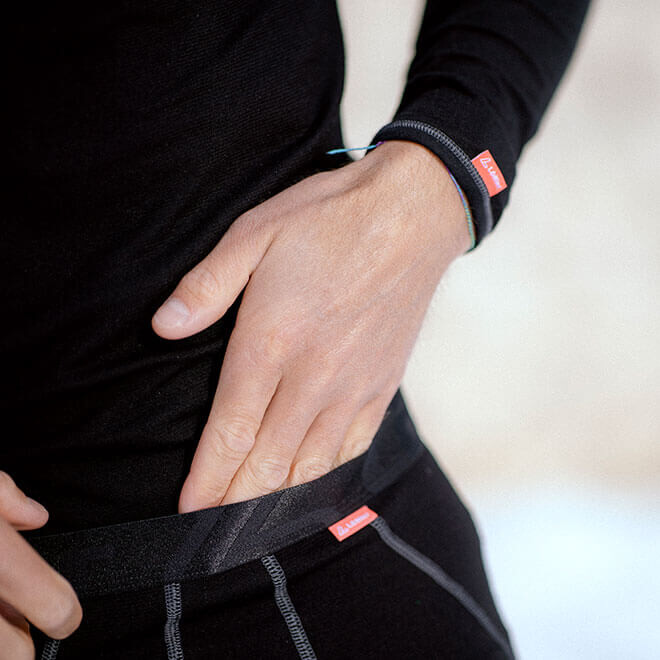
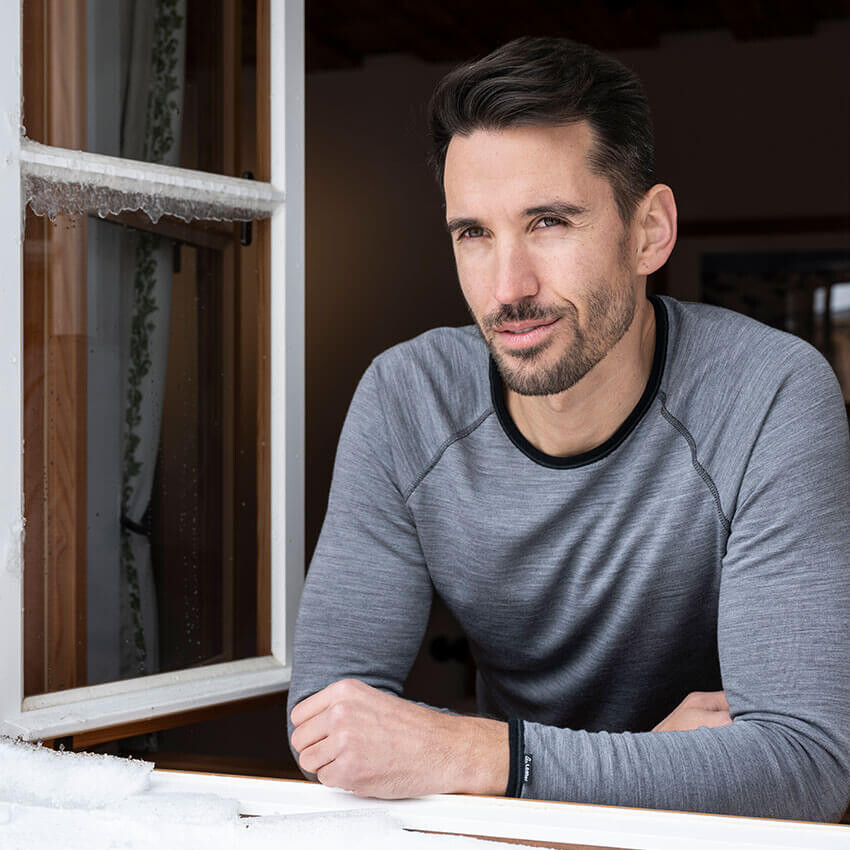
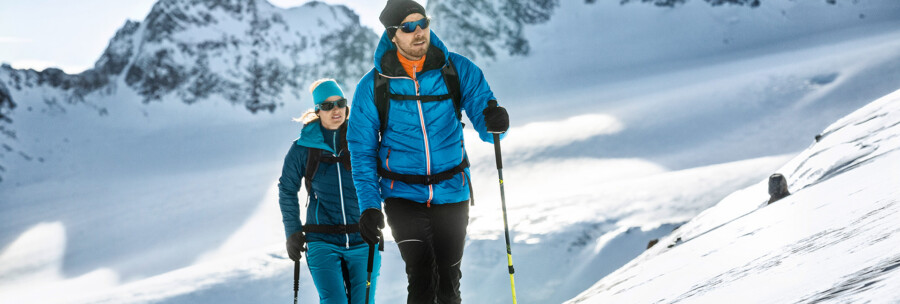
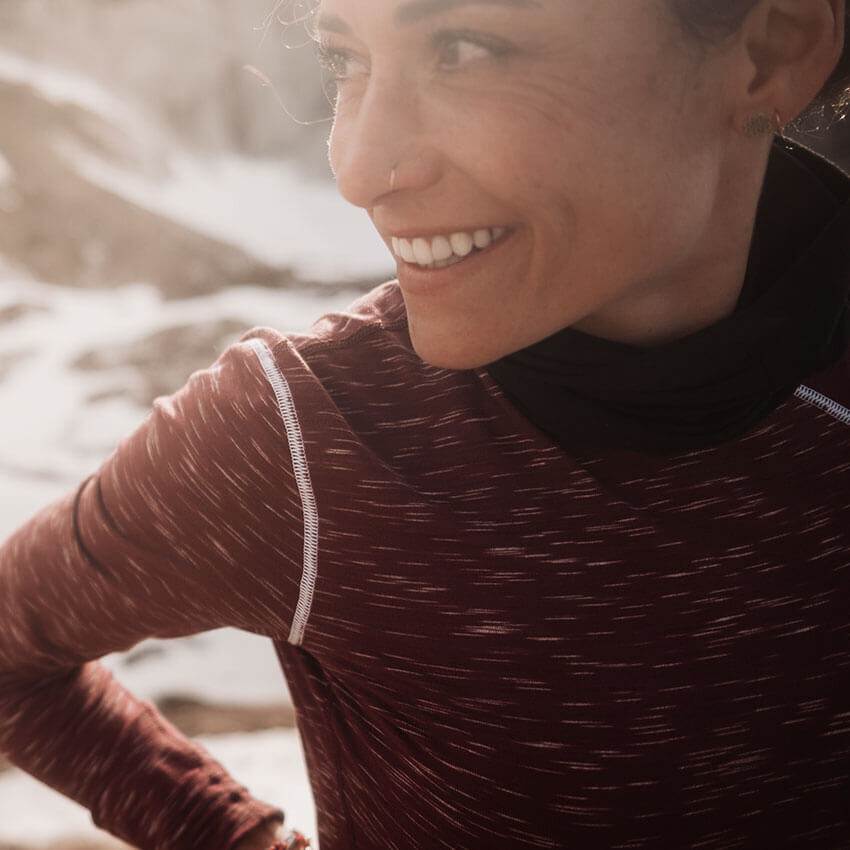
Cross-country skiing clothing needs three things. Firstly, a base layer that wicks moisture away from the skin immediately. Secondly, weather protection at the front and breathability at the back. Thirdly, full freedom of movement at the shoulders, hips and knees. A mid-layer is not part of the basic kit. For most training sessions, two layers on top and a pair of tights on the bottom are sufficient.
Why cross-country skiing clothing works differently from ski clothing
Many winter sports enthusiasts buy their first cross-country skiing kit on impulse whilst on a skiing holiday. This rarely works out well. In downhill skiing, periods of intense exertion alternate with long periods of inactivity. You cool down on the lift. That’s why ski clothing is thickly insulated and provides all-round protection from the wind.
Cross-country skiing turns this logic on its head. As soon as you’re on your cross-country skis, you generate heat and moisture throughout the entire session. In a thickly insulated jacket, your muscles overheat immediately. After ten minutes you’re sweating; after thirty minutes you’re freezing in the damp fabric.
Added to this is the wind direction. On the trail, the headwind almost always hits the front. Your back remains in the slipstream. Cross-country jackets from LÖFFLER therefore feature an asymmetrical design: windproof material at the front, open-knit fabric at the back. The W/M JACKET PRO AB ULTRA (item no. 30859 / 30880, EUR 189.99) uses Airblocc Ultralight on the front, shoulders and collar. The back is covered in elasticated thermal velour.
The third difference relates to movement. Skating and diagonal stride require a wide range of motion in the shoulders and hips. Stiff membrane fabrics restrict your movement. That’s why LÖFFLER combines softshell with highly elastic knit fabric rather than a rigid laminate. The cut and choice of materials for the Pro Collection are based on feedback from active athletes.
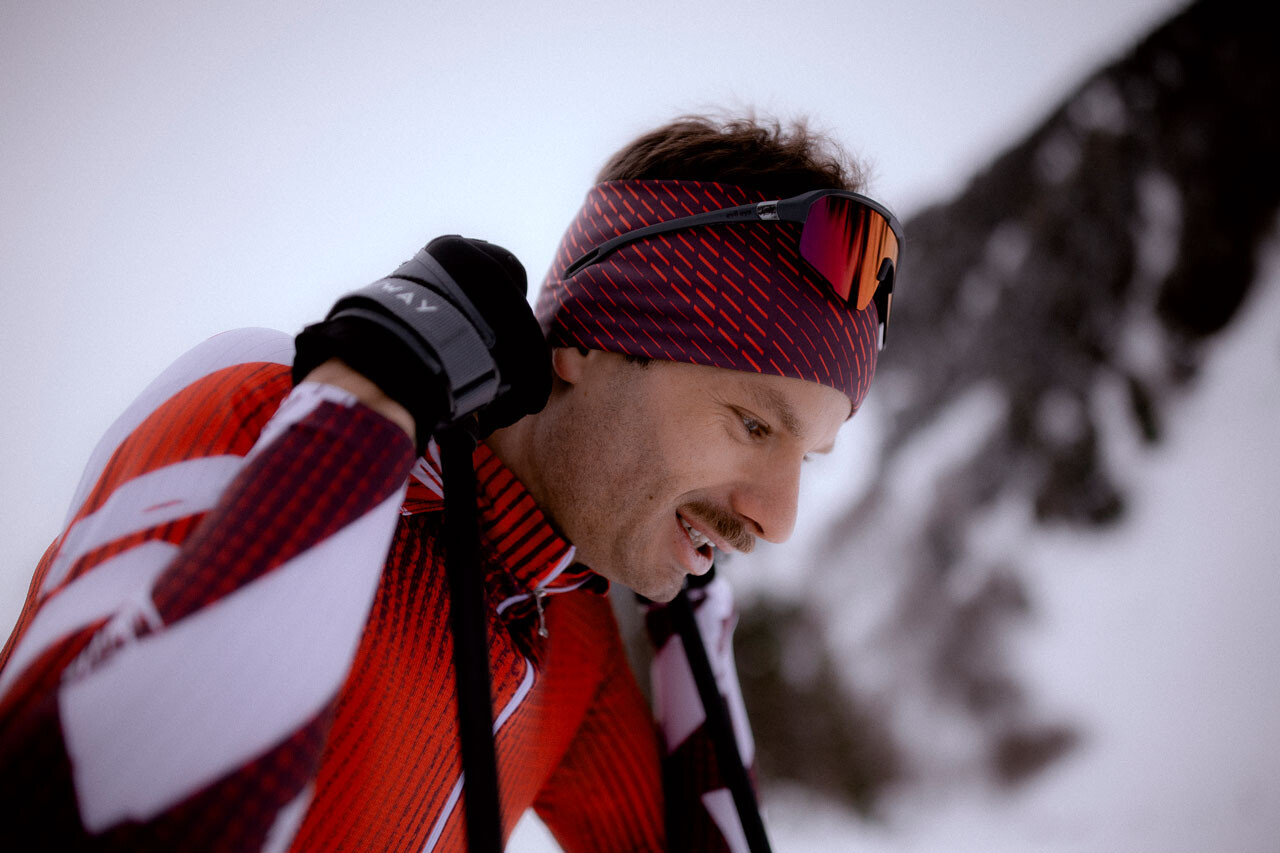
The three setups: Training, Everyday, Racing
Your decision on which product to buy depends less on the temperature than on your usage profile. Three profiles cover almost all scenarios. They differ in the number of layers of clothing, the cut and the comfort.
Training setup – you ski at a brisk pace two to four times a week, often with intervals. You need maximum moisture-wicking and a slim fit. Combination: transtex® light 100 next to the skin, paired with an Airblocc jacket and tights with a wind shield at the front.
Everyday and Touring Setup – you head out onto the cross-country trail once or twice a week at a leisurely pace, taking breaks and enjoying the loop. You need extra warmth and pockets. Combination: transtex® Merino 200 next to the skin, paired with a lined jacket or a mid-layer and thermal tights.
Racing setup – you’re taking part in fun runs or competitive events. You need minimal weight, a snug fit and a warm-up garment for the start. Combination: a racing suit over a thin base layer, paired with warm-up tights featuring a full-length side zip.
You’ll find the details for all three setups in the comparison table below.
| Criteria | Training | Daily use & touring | Racing |
|---|---|---|---|
| Use profile | 2–4 times a week, fast, intervals | 1–2 times a week, slowly, with breaks | Public race and competition |
| 1st layer | transtex® light 100 L/S Art. 23114 H / 23144 D |
transtex® Merino 200 L/S Art. 27464 H / 27462 D |
transtex® light 100 Singlet Art. 22604 H / 22606 D |
| 2nd layer | Not required | Midlayer transtex® Art. 14001 H / 10989 D |
Not required |
| Outer layer | JACKET ARROW AB ULTRA Art. 30883 H / 30862 D |
HOODED JACKET NORTH AB LIGHT Art. 30116 H / 30073 D |
RACESUITE PRO 26 Art. 30857 H / 30856 D |
| Legs | TIGHTS AB WARM Art. 30155 H / 30114 D |
TIGHTS CARBON AB WARM Art. 30156 H / 30113 D |
WARM-UP BIB TIGHTS AB WARM über dem Anzug Art. 30157 H / 30112 D |
| Fit | Slim Fit | Mid bis Comfort Fit | Tight Fit |
| Bags | 2 zipped pockets | Side and back pockets | minimal |
| UVP outer layer | EUR 199,99 | EUR 239,99 | EUR 199,99 |
| UVP Legs | EUR 119,99 | EUR 139,99 | EUR 159,99 |
Art. 23114 H / 23144 D
Art. 27464 H / 27462 D
Art. 22604 H / 22606 D
Art. 14001 H / 10989 D
Art. 30883 H / 30862 D
Art. 30116 H / 30073 D
Art. 30857 H / 30856 D
Art. 30155 H / 30114 D
Art. 30156 H / 30113 D
Art. 30157 H / 30112 D
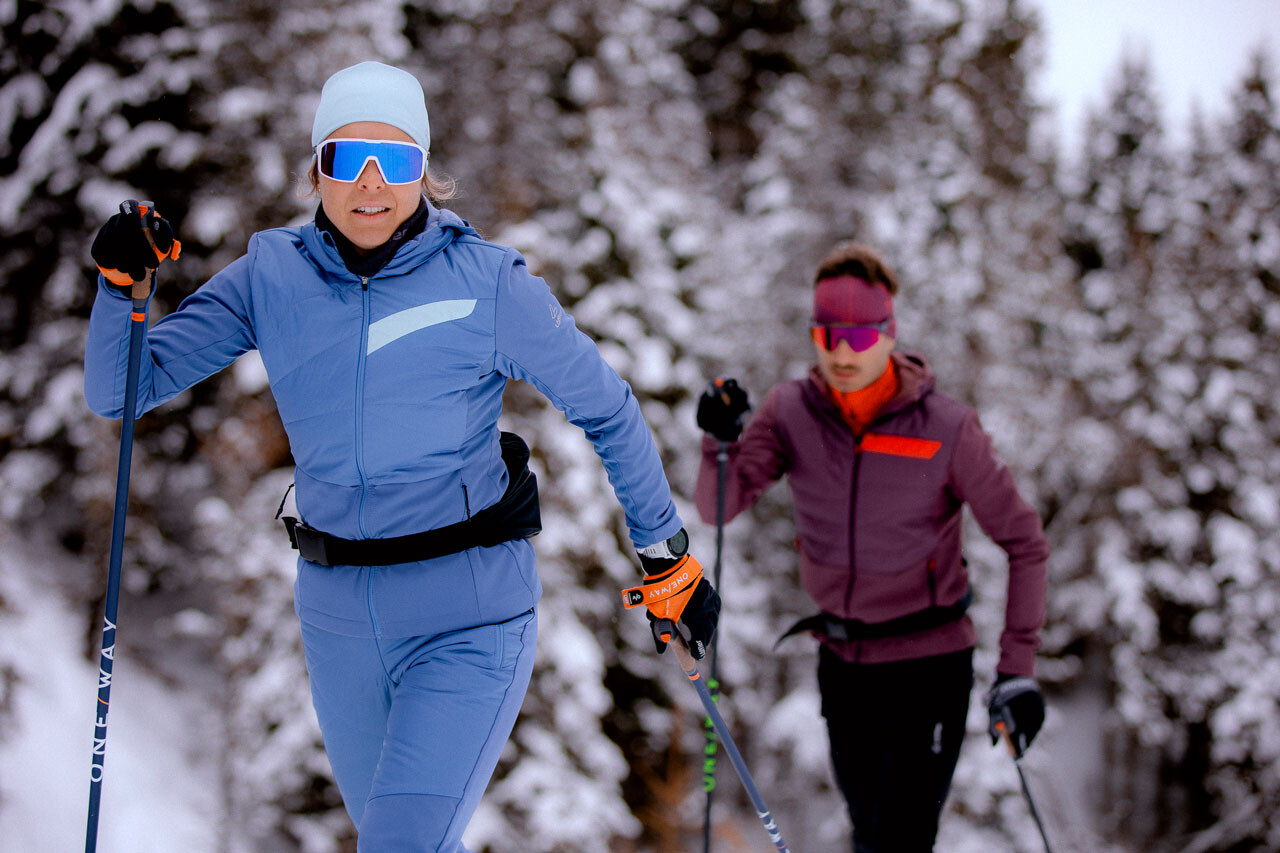
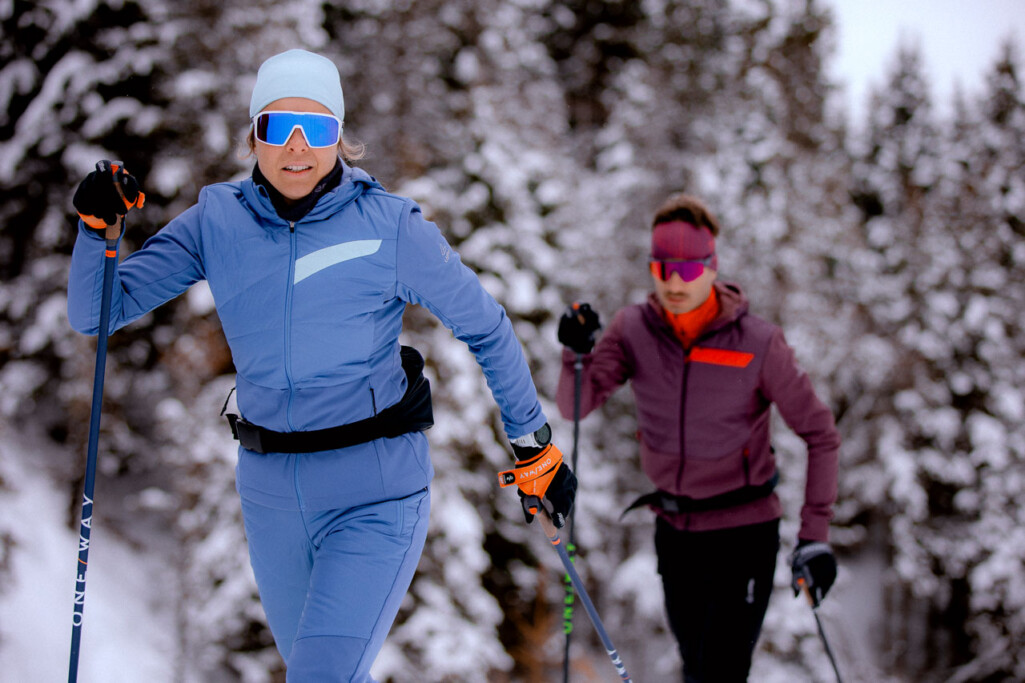
Layers by temperature
The following guidelines apply to the moment you set off. Make a conscious effort to dress a little too lightly. After ten minutes of exercise, any outfit will feel around five degrees warmer.
+5 to 0 °C, high pace: A long-sleeved top made from transtex® light 100 (item no. 23114 men’s / 23144 women’s, EUR 54.99) plus a lightweight softshell jacket will suffice. For the lower half, the TIGHTS DOUBLE DRY (item no. 31176 / 31175, EUR 89.99) without a windbreaker are sufficient.
0 to −5 °C, fast pace: The same base layer, plus an Airblocc jacket. For the lower half, switch to the TIGHTS AB WARM (item no. 30155 / 30114, EUR 119.99) with a windproof front.
−5 to −10 °C, moderate pace: Now wear the transtex® Merino 200 (Item 27464 / 27462, EUR 89.99). Over this, a transtex® mid-layer, with the Airblocc jacket on the outside. On the bottom, the TIGHTS CARBON AB WARM (Item 30156 / 30113, EUR 139.99).
Below −10 °C: transtex® Merino 260 as a base layer (item no. 30805 / 30793, EUR 119.99), with a mid-layer and jacket over the top. Add a headband, cross-country skiing gloves and a face mask. In these weather conditions, your extremities will determine how your run goes.
Wet snow or snowfall: the GEMINI DDP TIGHTS (item no. 28470 / 28419, EUR 199.99) feature double-layered fabric on the front of the thighs with WPM Pocket 2.0. This material withstands a water column of 20,000 mm.
| Conditions | 1st layer (on the skin) | 2nd layer | Legs | Addition |
|---|---|---|---|---|
| +5 bis 0 °C, high speed | transtex® light 100 L/S (23114 / 23144) | lightweight softshell jacket | TIGHTS DOUBLE DRY (31176 / 31175) | thin headband |
| 0 bis −5 °C, high speed | transtex® light 100 L/S (23114 / 23144) | JACKET ARROW AB ULTRA (30883 / 30862) | TIGHTS AB WARM (30155 / 30114) | Headband, thin gloves |
| 0 bis −5 °C, slow speed | transtex® Merino 200 L/S (27464 / 27462) | HOODED JACKET NORTH AB LIGHT (30116 / 30073) | TIGHTS THERMO TIV (27230 / 27231) | Beanie, warm gloves |
| −5 bis −10 °C, moderate pace | transtex® Merino 200 L/S (27464 / 27462) | Midlayer transtex® + Airblocc-Jacke | TIGHTS CARBON AB WARM (30156 / 30113) | Beanie, gloves |
| below −10 °C | transtex® Merino 260 L/S (30805 / 30793) | Midlayer + Airblocc Warm Jacket | TIGHTS CARBON AB WARM (30156 / 30113) | Airblocc Face Mask (30176) |
| Strong wind, open cross-country ski trail | M WINDPROOF HZ SHIRT transtex® light 100 (28162) | Airblocc-Jacket | TIGHTS AB WARM (30155 / 30114) | Choose wind protection at the front only |
| Wet snow or snowfall | transtex® light 100 L/S (23114 / 23144) | Airblocc-Jacket | TIGHTS GEMINI DDP, 20.000 mm (28470 / 28419) | A spare shirt for afterwards |
Your base layer makes all the difference throughout the day
Your functional underwear determines whether your whole outfit works. It regulates your body’s microclimate. Nothing else can correct a mistake at this level.
LÖFFLER knits transtex® from polypropylene. This synthetic fibre absorbs zero per cent water. This means that moisture does not remain trapped in the fibre, but is transported outwards. The transtex® knitting technology achieves this moisture wicking mechanically through its construction, not via a chemical finish. This moisture management therefore continues to work even after the fiftieth wash.
Rule of thumb: the higher the intensity, the more synthetic fibre you need. For interval training and races, transtex® light 100, with its 100 g/m², comes out on top. For gentle rides and long breaks, merino base layers are the best choice – specifically transtex® Merino 200, with polypropylene on the inside and merino wool on the outside. The polypropylene wicks moisture away, whilst the wool regulates the temperature.
Both materials are highly effective at preventing odours. Polypropylene absorbs hardly any odour, and neither does merino. So you don’t have to choose between them.
Breathability: what to look for in weatherproof clothing
Thermal performance alone is not a reliable indicator in cross-country skiing. What matters is how much water vapour a layer allows to escape.
LÖFFLER measures this using the MVTR value: the amount of water vapour, in grams, that passes through one square metre of fabric in 24 hours. The scale in the LÖFFLER Workbook:
– under 3,000 g/m²/24 h – not breathable
– from 3,000 g/m²/24 h – breathable
– 10,000 g/m²/24 h and above – very breathable
– over 15,000 g/m²/24 h – extremely breathable
The higher the value, the later you’ll overheat on an ascent. For cross-country skiing, the rule is: for the same thermal performance, always choose the more breathable option.
A special case for fast runners: the M WINDPROOF HZ SHIRT L/S transtex® light 100 (item no. 28162, EUR 99.99). It features a windproof trim only at the front. The back remains open transtex® knit. This allows you to ride through windy, open sections without a second windproof layer.
| Material | Grams per square metre | Structure | Optimal intensity | Temperature range | Sample article |
|---|---|---|---|---|---|
| transtex® light 100 | 100 g/m² | 100% polypropylene, 3D knit | very high, anaerobic | +5 bis −5 °C | Shirt L/S 23114 H / 23144 D – EUR 54,99 |
| Merino Light 130 | 130 g/m² | 95 % wool, 5 % elastane, 15,5 microns | low to medium | +5 bis −5 °C | Shirt L/S 30804 H / 30797 D – EUR 84,99 |
| transtex® warm 180 | 180 g/m² | polypropylen on the inside, cotton/modal on the outside | medium | 0 bis −10 °C | Shirt L/S 10732 H / 10745 D – EUR 69,99 |
| transtex® Merino 200 | 200 g/m² | polypropylen on the inside, Merino wool on the outside | low to medium | 0 bis −10 °C | Shirt L/S 27464 H / 27462 D – EUR 89,99 |
| transtex® warm 220 | 220 g/m² | Seamless knitt, polypropylen on the inside | medium | −5 bis −15 °C | Shirt L/S 30800 H / 30789 D – EUR 99,99 |
| transtex® Merino 260 | 260 g/m² | Seamless, polypropylen on the inside, Merino on the outside | low | below −10 °C | Shirt L/S 30805 H / 30793 D – EUR 119,99 |
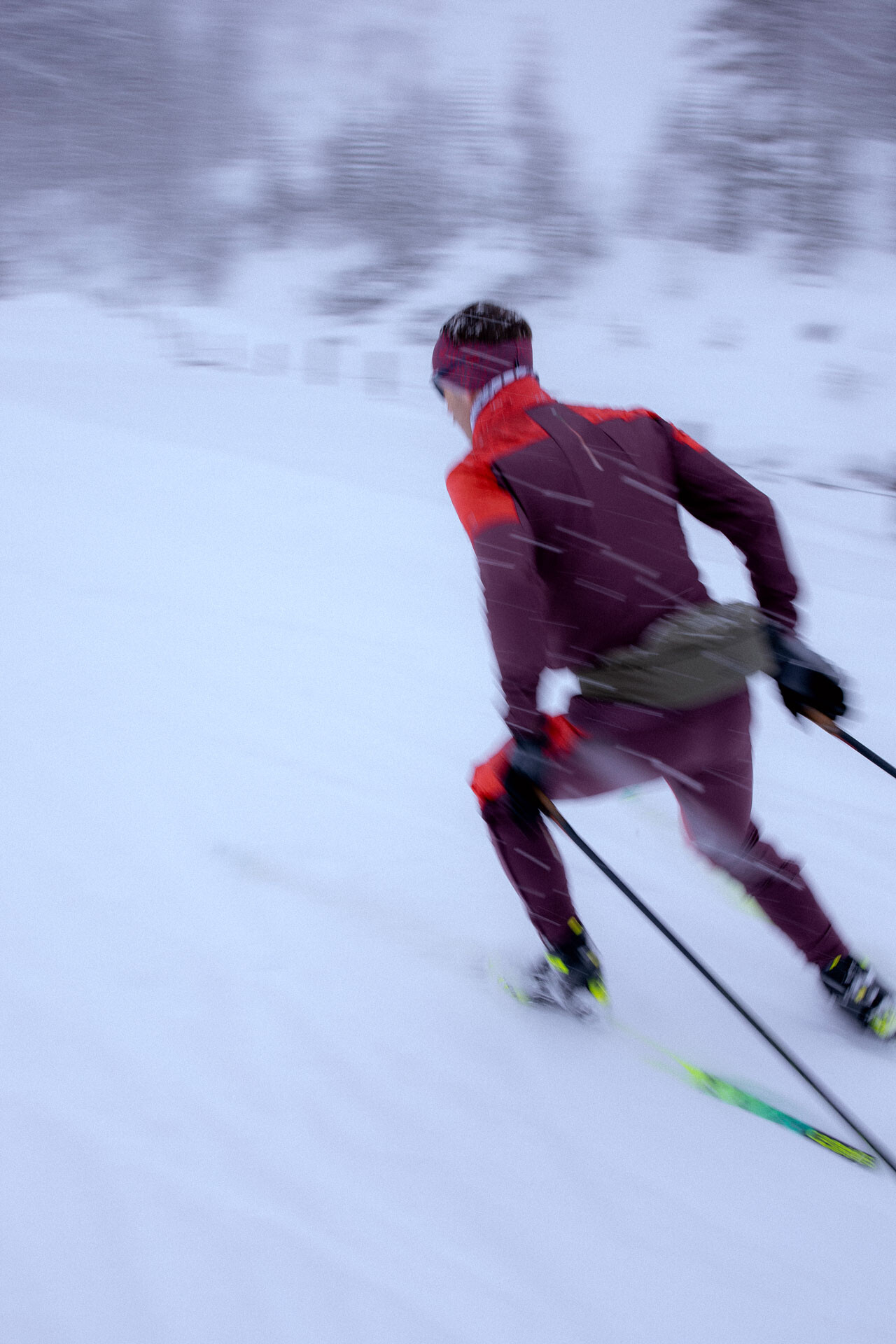
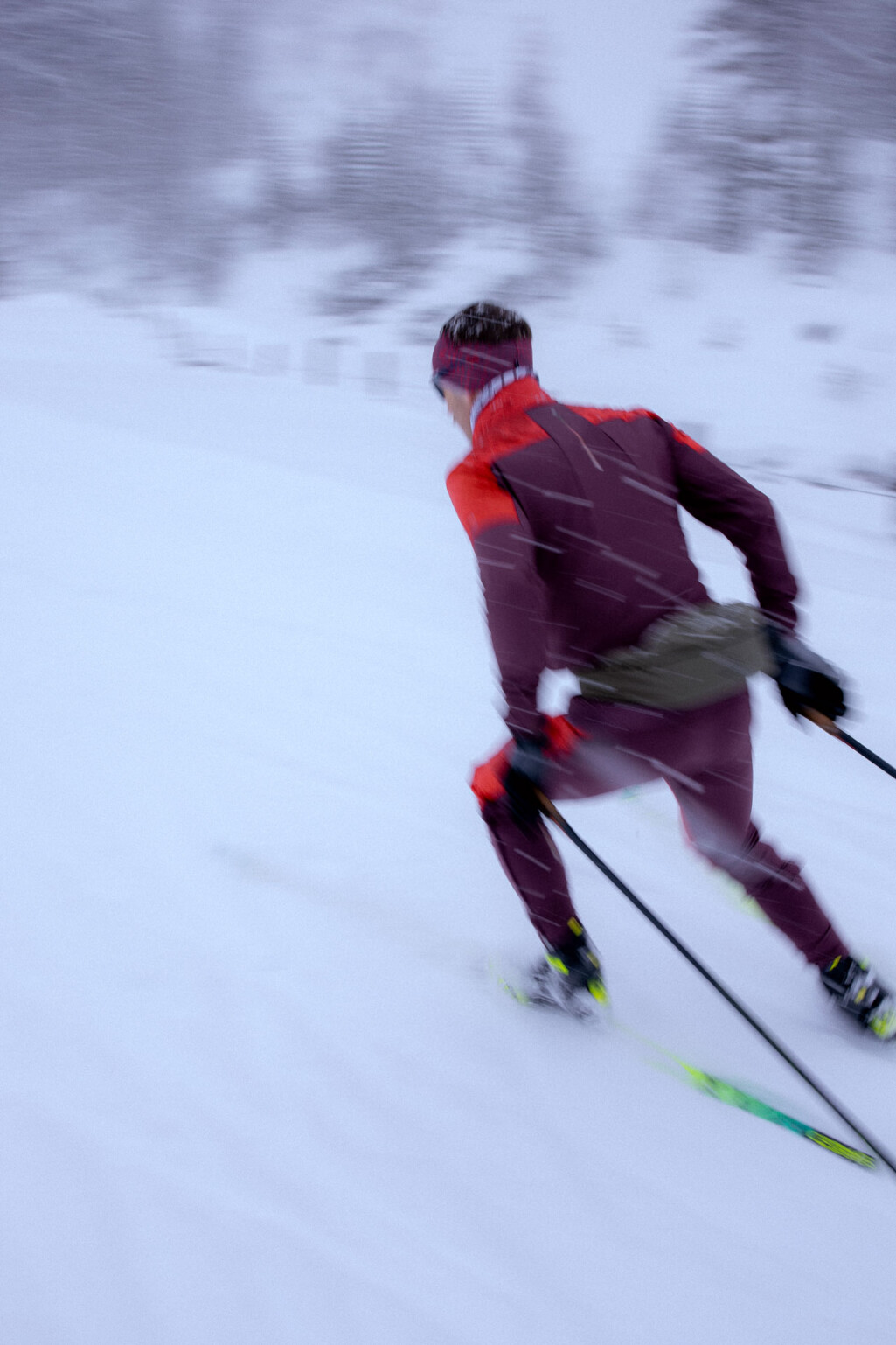
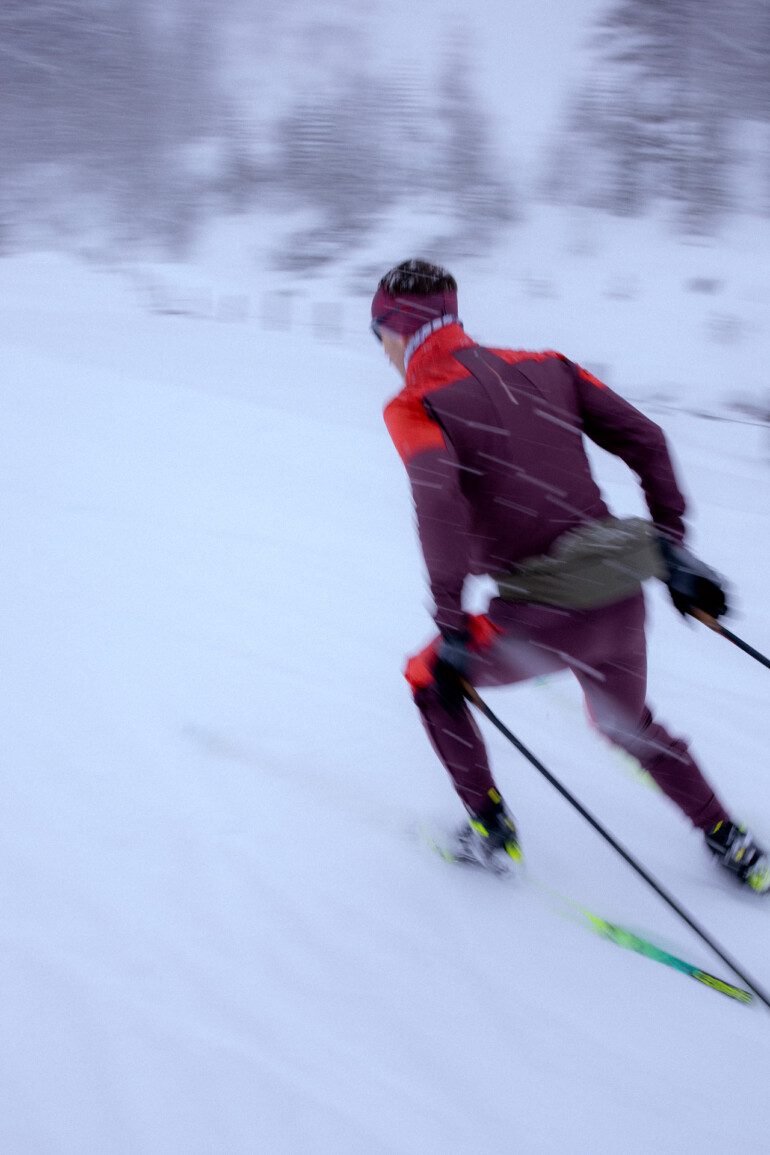
Trousers and tights: wind protection at the front, moisture-wicking at the back
Your legs do the hardest work when cross-country skiing. Yet many people still buy kit that’s too warm for this.
Airblocc is a 3-layer softshell made from 100 per cent polyester. LÖFFLER manufactures it as a single-material garment, PFAS-free and in Europe. The front blocks the wind, whilst the back allows water vapour to escape. This is exactly the kind of asymmetry you need on the cross-country trail.
Three versions cover all needs:
Airblocc Warm – fleece lining, for cold and windy days
Airblocc Light – interlock lining, for a standard winter
Airblocc Ultralight – super-light softshell, for race pace and warm-ups
In mild conditions, you don’t need a membrane at all. In that case, the TIGHTS DOUBLE DRY are ideal: a two-layer, multi-elastic knit made from Ried, which quickly wicks away moisture.
Competition calls for a different approach. The RACESUITE PRO 26 (item no. 30857 men’s / 30856 women’s, EUR 199.99) combines Dimple Elastic with a Race Vent back panel. Over the top of these, you wear the WARM-UP BIB TIGHTS AB WARM (item no. 30157 / 30112, EUR 159.99) right up until the start. Their full-length 2-way side zip can be opened over your shoes.
| Model | Art.-Nr. M / W | Material at the front | Best condition | Price |
|---|---|---|---|---|
| TIGHTS DOUBLE DRY | 31176 / 31175 | Double Dry knit, not windproof | +5 bis 0 °C, fast pace | EUR 89,99 |
| TIGHTS THERMO BASIC | 30893 / 30877 | Thermo-Innenvelours | 0 bis −5 °C, wind-protected cross-country ski trail | EUR 99,99 |
| TIGHTS AB LIGHT | 30892 / 30874 | Airblocc Softshell Light | 0 bis −5 °C with wind | EUR 99,99 |
| TIGHTS THERMO TIV | 27230 / 27231 | Thermo-Innenvelours, transtex®-Futter | −5 bis −10 °C, light wind | EUR 119,99 |
| TIGHTS AB WARM | 30155 / 30114 | Airblocc Softshell Warm, transtex®-back | 0 bis −10 °C with wind | EUR 119,99 |
| TIGHTS CARBON AB WARM | 30156 / 30113 | Airblocc Softshell Warm in a carbon-look design | −5 bis −12 °C | EUR 139,99 |
| WARM-UP BIB TIGHTS AB WARM | 30157 / 30112 | Airblocc Softshell warm, ssde 2-way zip | Warm-up and starting area | EUR 159,99 |
| TIGHTS GEMINI DDP | 28470 / 28419 | WPM Pocket 2.0, 20.000 mm water column | wet snow and snowfall | EUR 199,99 |
| TIGHTS PRO BREEZE | 30881 / 30860 | Double Dry with windshell on the tight | Racing and racing pace | EUR 199,99 |
| PANTS ALASKA ASW TAPERED | 30154 / 31622 | Active Stretch Warm | Touring, everyday use, winter hiking | EUR 134,99 |
When a mid-layer really makes sense
The layering principle often leads to wearing one layer too many. The mid-layer is the layer most commonly chosen incorrectly in cross-country skiing. It isn’t suitable for every outfit.
Wear a mid-layer if at least two of the following apply: temperatures below −5 °C, a steady pace, longer breaks or strong winds. You’ll rarely need one when temperatures are above 0 °C.
Suitable options:
- MIDLAYER transtex® (Item 14001 Men’s / 10989 Women’s, EUR 74.99) – thin, stretchy, half-zip for temperature regulation
- MIDLAYER MOTION (Item 30890, EUR 119.99) – openwork knit on the inside, provides warmth whilst being lightweight
- MIDJACKET CB TECH-MERINO (Item 30824 Men’s, EUR 159.99) – waffle texture with merino on the inside, for touring and breaks
- MIDJACKET FLEECE (Item 30048 Men’s / 30058 Women’s, EUR 179.99) – the warmest option, a fleece jacket for quiet days and long breaks
Adjustability beats warmth. A half-zip that you open on the climb replaces an entire layer.
Women and men: what really sets them apart
The materials are identical. The difference lies in the cut and how warm they feel.
LÖFFLER designs women’s styles with a figure-hugging waist and a shorter torso length. Men’s styles have broader shoulders and a longer front. Women’s tights are available in sizes 34–46, whilst men’s tights are available in sizes 46–56.
On average, women’s hands and feet cool down more quickly. Solve this with accessories, not with a thicker jacket. A face mask and warm cross-country gloves will restrict your movement less than an extra layer on your body.
Men tend to make the opposite mistake. They set off too warmly and end up sweating through their base layers. Choose a jacket one size thinner than your instinct tells you when you step outside.
Five mistakes that’ll make you lose body heat on the cross-country ski trail
- Choose the right ski clothing. In an insulated ski jacket, you’ll overheat within minutes whilst cross-country skiing.
- Wearing cotton next to the skin. Cotton traps moisture and makes you feel cold during every break.
- Choosing a jacket that’s fully windproof. Your back needs breathable fabric, otherwise sweat will condense on the inside.
- Starting out too warm. The first few minutes should feel cool. Anything else will come back to haunt you.
- Making the mid-layer your standard layer. It’s for exceptionally cold conditions, not every session.
FAQ
What sort of clothing do I need for cross-country skiing?
To get started, you’ll need three items of clothing. Firstly, a functional shirt made from transtex® worn directly against the skin. Secondly, a windproof cross-country skiing jacket made from Airblocc softshell. Thirdly, a pair of long tights with wind protection at the front. You’ll also need a hat or headband and thin gloves. You only need to buy a mid-layer once you’re regularly out and about in temperatures below −5 °C and at a leisurely pace.
What sort of cross-country skiing clothing is best for training?
For regular training, opt for thin and close-fitting clothing. A long-sleeved top made from transtex® light 100 (100 g/m²) wicks away sweat the quickest. Wear an Airblocc jacket with a windproof front over the top. On the bottom, wear tights with wind protection on the thighs, such as the TIGHTS AB WARM (EUR 119.99). This combination is suitable for temperatures ranging from +5 °C to −10 °C.
What is the difference between a race setup and an everyday setup?
The race setup consists of a one-piece, tight-fit racing suit worn over a thin base layer, plus a pair of warm-up tights for the start. It saves on weight and reduces drag, but offers hardly any pockets and little insulation. The everyday kit uses separate pieces, warmer materials such as transtex® Merino 200, and pockets for your mobile and keys. For anything less demanding than a race, you’re better off with the everyday kit.
What should I wear for cross-country skiing when it’s 0 degrees?
At 0 °C and at a brisk pace, wear a long-sleeved top made from transtex® light 100, an Airblocc jacket over the top, and tights with a windproof front. At a leisurely pace, swap the base layer for transtex® Merino 200 and add a thin mid-layer with a half-zip.
Do I need a windproof jacket, or is a mid-layer enough?
On the cross-country slope, you rarely need both at the same time. The windproof layer takes priority, because the wind chill cools you down faster than the cold on its own. A mid-layer is only needed below −5 °C or when skiing at a leisurely pace with breaks.
Which is better for cross-country skiing: merino or synthetic?
Both work, but to varying degrees depending on the intensity. For interval training and races, transtex® light 100 made from polypropylene comes out on top, as the fibre absorbs zero per cent water and dries extremely quickly. For gentle runs and longer breaks, transtex® Merino 200 – with polypropylene on the inside and merino wool on the outside – is the better choice. Both materials are very effective at preventing odours.
How many layers do I need for cross-country skiing?
In most cases, two layers on top and one on the bottom. A base layer plus a windproof jacket cover the temperature range from +5 °C to −5 °C. Only then do you add a third layer underneath. More layers provide more warmth, but they restrict your freedom of movement and reduce moisture vapour release.