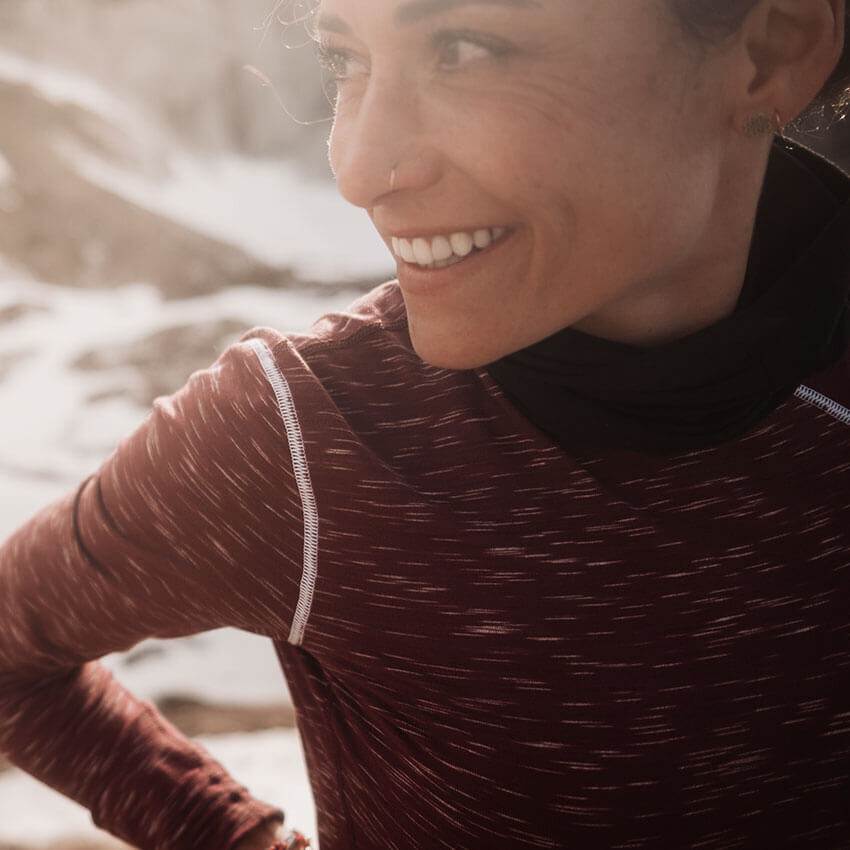
Buying ski base layers: The complete guide for women, men and children
You shouldn’t choose the right ski base layer based on the temperature, but on your activity. If you sweat a lot (ski touring, cross-country skiing, children on the slopes), you need rapid moisture-wicking. If you’re standing still or skiing at a leisurely pace, you need more warmth. Löffler addresses both needs with six different grades of transtex® fabric – ranging from pure polypropylene to a two-layer merino hybrid.
Löffler has been designing and knitting its own ski base layers since 1976 at its headquarters in Ried im Innkreis, Austria. The transtex® technology mechanically wicks sweat away from the skin. It requires no chemicals and no silver ions to do so. For skiers, ski tourers, cross-country skiers and families, this means staying warm without getting chilled by your own sweat.
The qualities of good ski base layers
Ski base layers are the first layer in the layering system. They sit directly against the skin and fulfil three functions at once.
- Wicking moisture away from the skin. Wet skin cools down up to 25 times faster than dry skin. That’s why a good base layer wicks sweat away immediately. Cotton base layers absorb sweat and trap it against the skin – on the slopes, this will leave you feeling chilled.
- Retaining warmth without overheating. The fibre insulates, but releases excess heat. This keeps you dry on the ascent and warm on the descent.
- Preventing odours. Polypropylene and merino wool absorb hardly any odour. You can wear the same shirt for several days of skiing without it going off. Neither fibre requires chemical odour blockers.
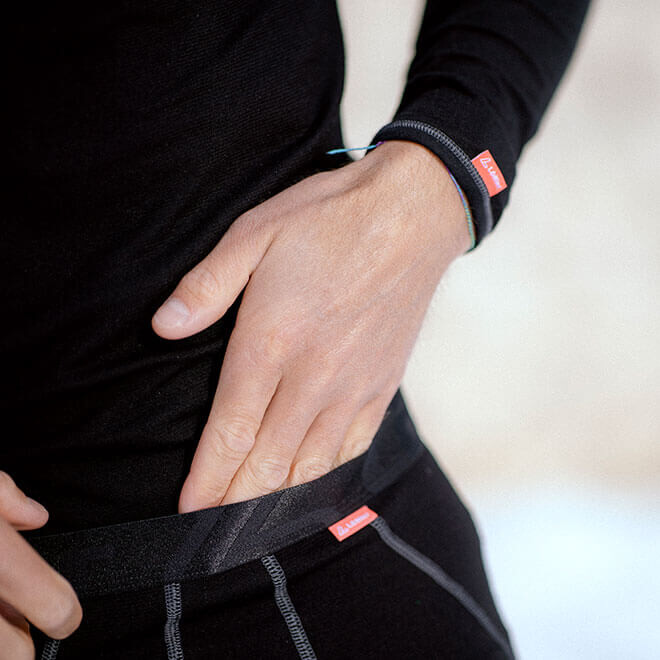
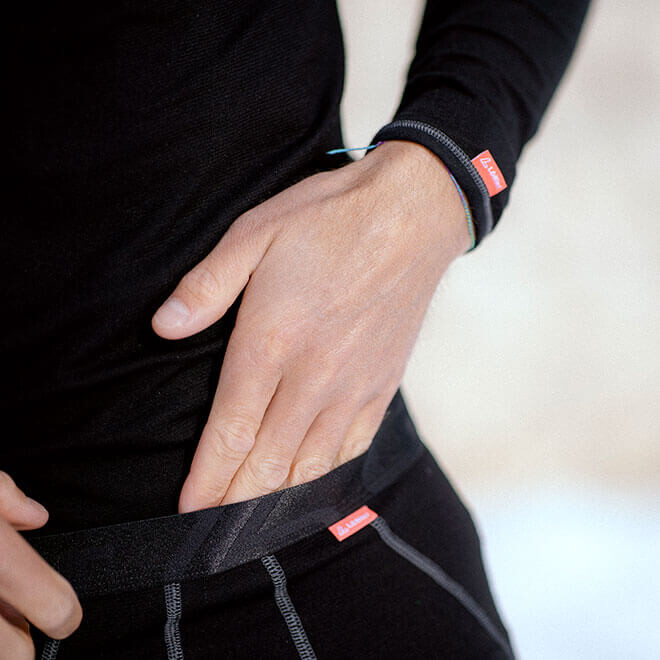
- The fourth, often overlooked task: not to chafe. Under tight-fitting ski clothing, traditional seams rub against the shoulders and waistband. Löffler uses super-soft flat seams to ensure nothing pinches.
The higher the intensity, the better pure synthetic fibre (transtex® light). The less strenuous the activity, the better merino or a merino blend.
The fibre remains the same, but the style and choice of designs vary.
Women
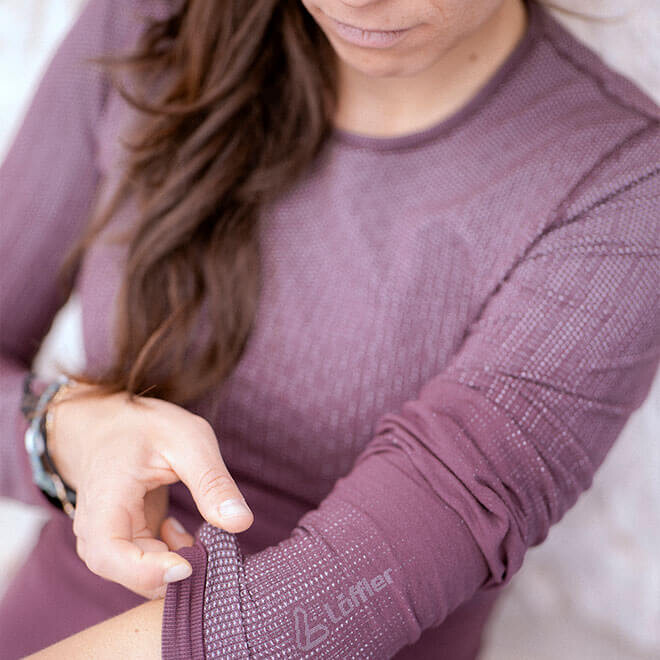
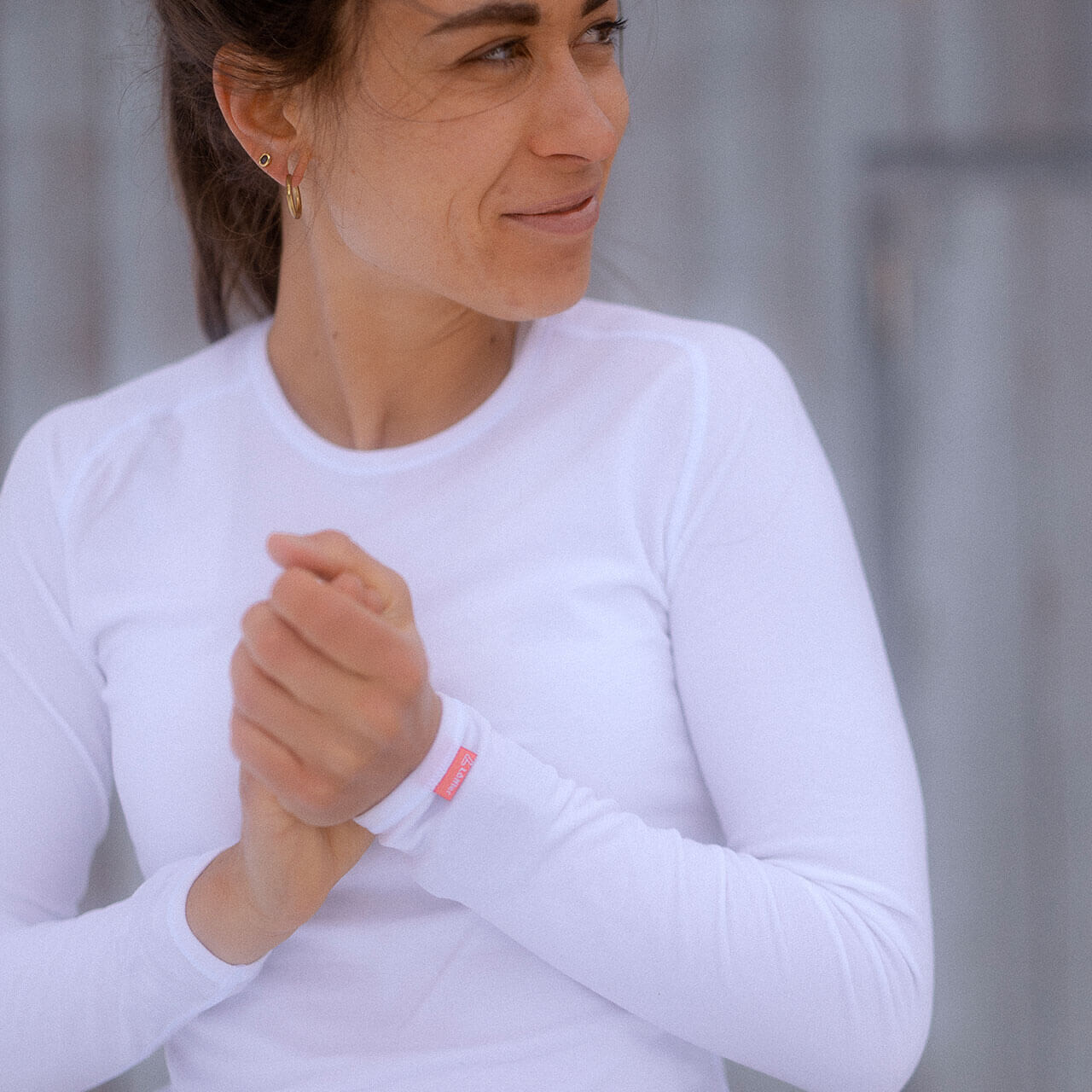
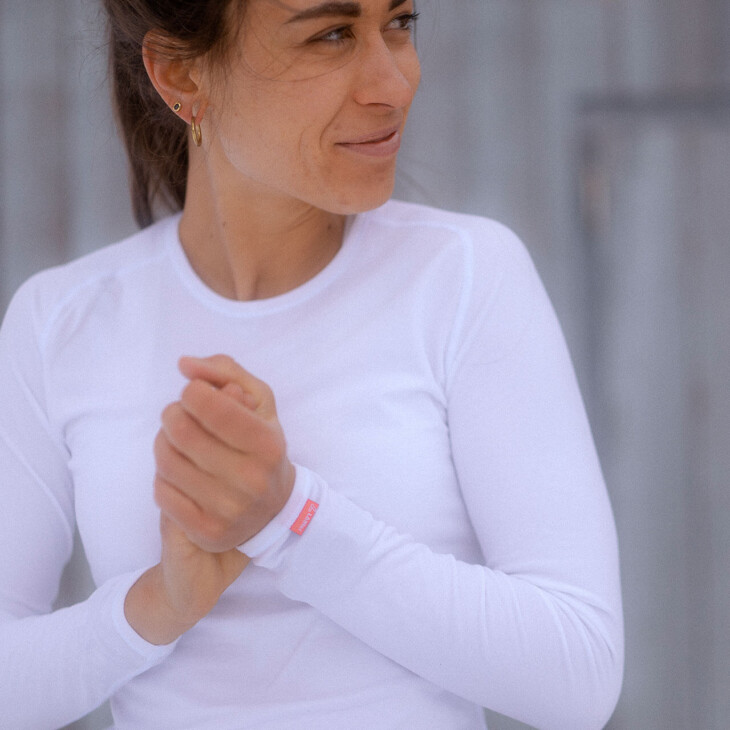
Löffler designs its women’s styles with a close-fitting SLIM FIT cut in sizes 34 to 50. The base layer fits snugly, as it only wicks away sweat when in direct contact with the skin. For bottoms, you can choose between briefs and hipsters rather than boxer shorts. The crew neck has a loose fit, whilst the raglan sleeves allow for free arm movement.
Men
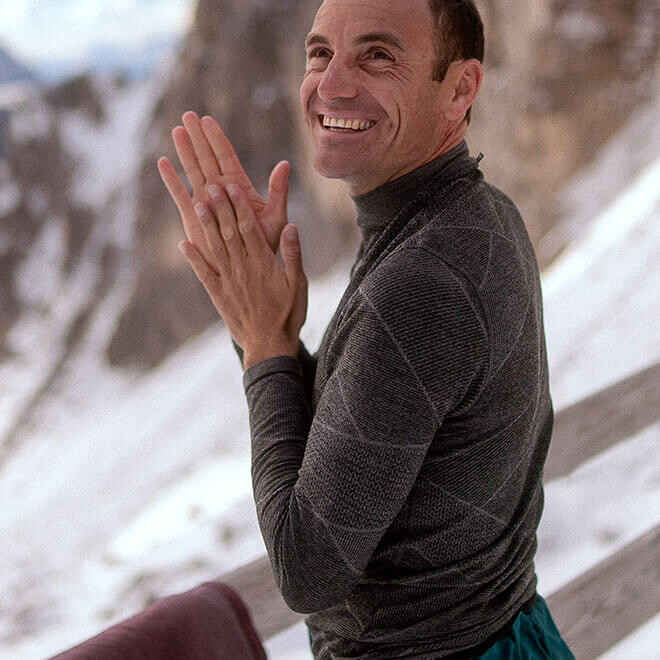
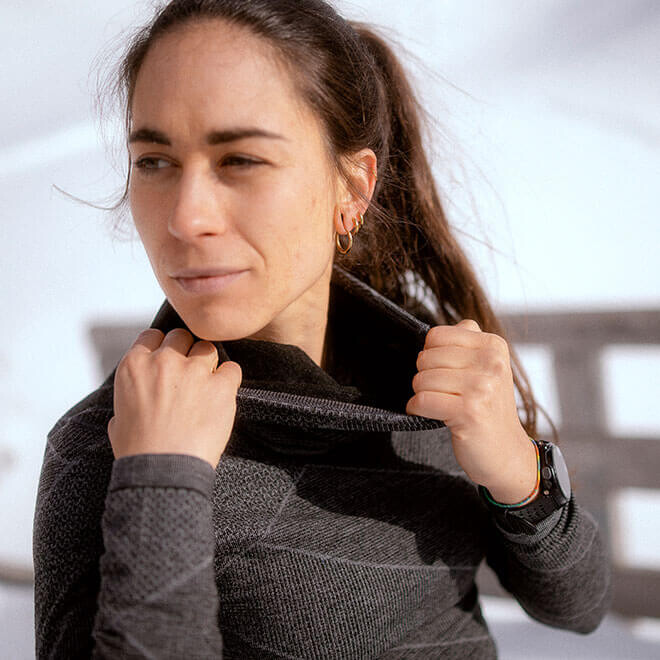
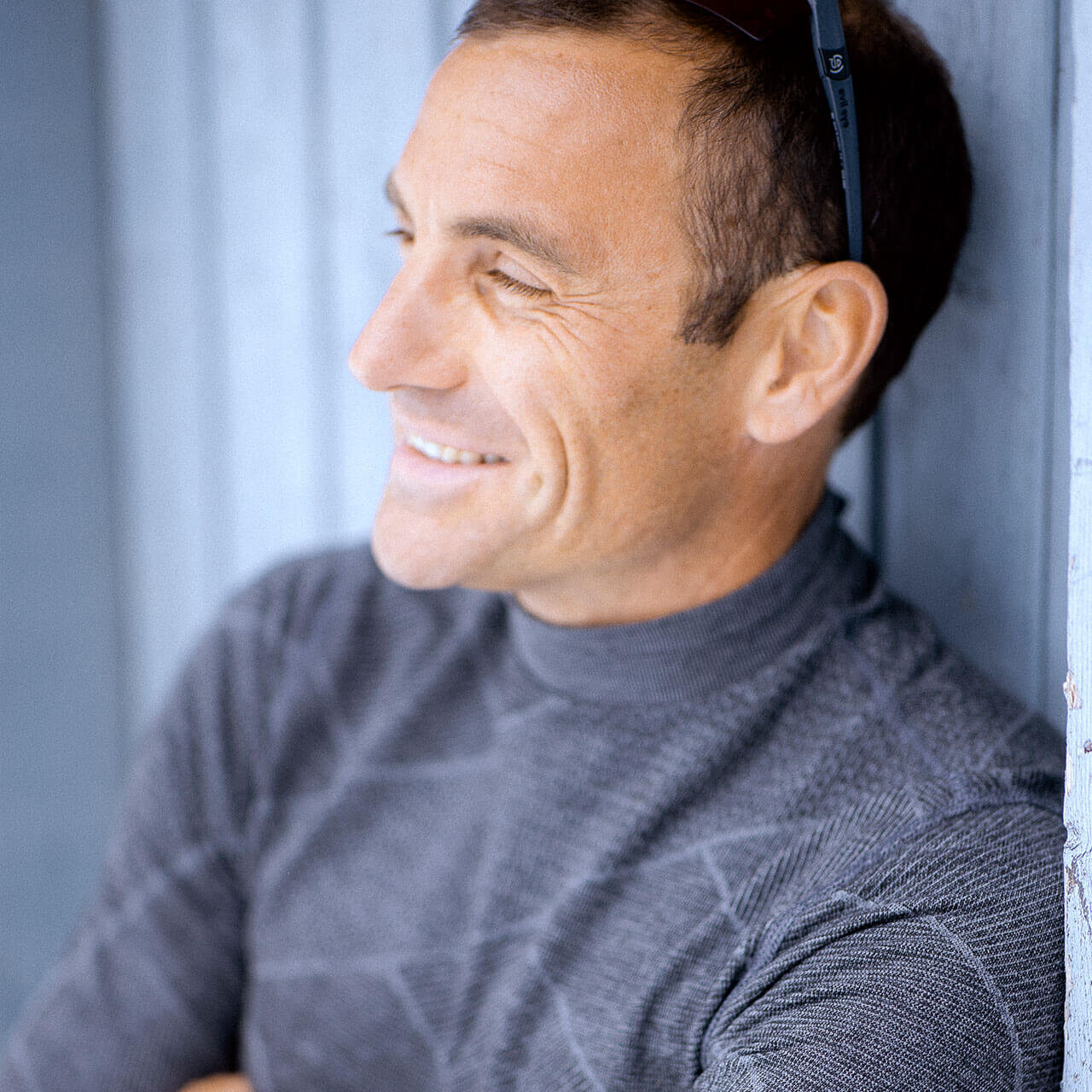
The men’s styles come in a close-fitting SLIM FIT. The bottoms are available as briefs, boxer shorts and knee-length Midway boxer shorts. For windy days, Löffler offers WINDPROOF versions: a windproof front protects the chest and thighs from the wind whilst skiing downhill or cross-country. Turtleneck styles with a pull-over collar provide additional protection for the neck.
Kids
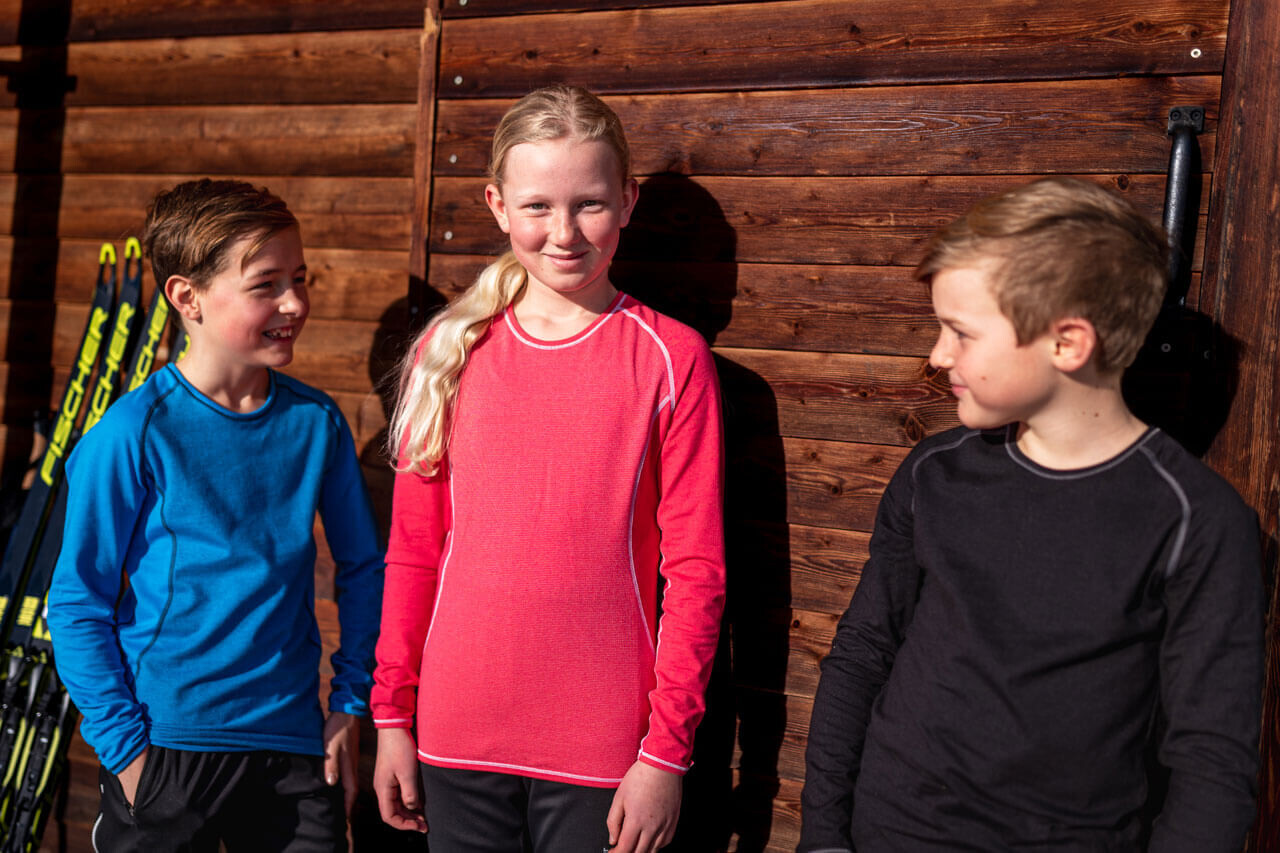
Children are constantly switching between running about and standing still. They overheat quickly and then cool down just as quickly. That’s why Löffler recommends sets made from transtex® light 100, transtex® warm 180 and transtex® Merino 200 for children, in sizes 104 to 164. A set is easy to put on and take off, lies flat against the skin and doesn’t chafe. The priority: not too warm, not too cold, and no cooling down after sweating.
- A child who runs around a lot and sweats → transtex® light 100 set (pure polypropylene, item no. 28289, EUR 59.99)
- A child who tends to ski at a leisurely pace and feels the cold → transtex® warm 180 set (item no. 30339, EUR 69.99)
- Very cold days, but the child stays warm nonetheless → transtex® Merino 200 set (item no. 28290, EUR 89.99)
| Article | Art.-Nr. | Material grade | Size | Price |
|---|---|---|---|---|
| Long set (top + trousers) | 28289 | transtex® light 100 | 128–164 | EUR 59,99 |
| Long set (top + trousers) | 30339 | transtex® warm 180 | 104–164 | EUR 69,99 |
| Set 3/4 (top + trousers) | 30341 | transtex® warm 180 | 104–164 | EUR 64,99 |
| Long set (top + trousers) | 28290 | transtex® Merino 200 | 104–164 | EUR 89,99 |
| Long-sleeved shirt (single) | 30336 | transtex® warm 180 | 104–164 | EUR 39,99 |
| Long underpants (single) | 30340 | transtex® warm 180 | 104–164 | EUR 39,99 |
Choice of material: the six transtex® materials
Löffler categorises its ski base layers across six materials. Each category covers a specific combination of warmth and activity level. You can find the full comparison matrix, including composition, guide values and key products, in the table below.
transtex® light 100 (100% PP). The world’s lightest fibre absorbs zero per cent water. It dries extremely quickly and stays dry even during the most strenuous activity. Your choice for ski touring ascents, cross-country skiing and days when you work up a sweat. Recommended temperature range: 0 to +10 °C at high intensity.
transtex® warm 180 (PP / Modal / cotton). Softer, warmer, with a brushed texture. This layer provides noticeable warmth whilst still keeping sweat under control. Your choice for cold days on the slopes with moderate to high activity levels. Recommended temperature range: -5 to +5 °C.
transtex® warm 220 (PP / Lyocell / PA). The warmest purely synthetic layer. It provides intense warmth and dries quickly. Your choice for very cold days with moderate activity. Recommended temperature range: -10 to 0 °C.
Merino light 130 (95% wool). Pure merino wool regulates temperature and remains odour-free. It feels soft and is suitable for quieter, cold days. Recommended temperature range: -3 to +8 °C for low-intensity activity.
transtex® Merino 200 (63% wool / 37% PP, double-layered). The all-rounder and the true strength of Löffler. Merino on the outside keeps you warm, whilst polypropylene on the inside keeps your skin dry. This gives you warmth and moisture-wicking in a single garment. Recommended temperature range: -8 to +3 °C.
transtex® Merino 260 (44% wool, two-layer). The warmest option of all. Your choice for very cold, quiet days or for people who feel the cold easily. Recommended temperature range: -15 to -3 °C.
Reines Merino oder Merino-Hybrid?
Pure merino wool keeps you warm and is odourless, but it soaks up sweat when you’re working up a sweat and then stays damp against your skin. This is exactly where the two-layer transtex® merino knit comes in. The inner polypropylene layer wicks sweat away from the skin to the outer merino layer. You get all the benefits of wool without any of the drawbacks. Most suppliers offer only pure merino or only synthetics.
| Material grade | Composition | Warmth | Activity | Guide temperature | Shirt langarm (Art. Damen/Herren) |
UVP |
|---|---|---|---|---|---|---|
| transtex® light 100 | 100 % PP | light | very high | 0 bis +10 °C | 23144 / 23114 | EUR 54,99 |
| transtex® warm 180 | 56% PP, 21% modal, 20% cotton, 3% EL | medium | high | −5 bis +5 °C | 10745 / 10732 | EUR 69,99 |
| transtex® warm 220 | 36% PP, 29% Lyocell, 17% PA, 15% cotton, 3% EL | high | medium | −10 bis 0 °C | 30789 / 30800 | EUR 99,99 |
| Merino light 130 | 95% wool, 5% EL | medium | low-medium | −3 bis +8 °C | 30797 / 30804 | EUR 84,99 |
| transtex® Merino 200 (zweischichtig) |
63% wool, 37% PP | medium–high | medium | −8 bis +3 °C | 27462 / 27464 | EUR 89,99 |
| transtex® Merino 260 (zweischichtig) |
44% wool, 33% PP, 11% PA, 10% recycled PP, 2% EL | very high | low – medium | −15 bis −3 °C | 30793 / 30805 | EUR 119,99 |
The temperature guidelines are intended as a guide based on activity level. Product codes: Long-sleeved shirt, women’s/men’s.
Select by activity: the decision-making logic
Think first about the intensity, then about the temperature. The second table below links activity and cold directly to the appropriate level.
Skitour and ascent (high intensity, lots of sweat).
→ transtex® light 100. Pure polypropylene wicks away sweat the quickest. For the descent, put a warmer mid-layer on over the top.
A slope with lots of breaks on the lift (varying exertion, cold).
→ transtex® Merino 200. The hybrid keeps you warm during breaks and stays dry whilst you’re riding.
Leisurely skiing on the slopes, quite days (not much activity, cold).
→ transtex® warm 220 oder Merino 260. Beide wärmen kräftig, wenn dein Körper wenig eigene Wärme produziert.
Cross-country skiing and skating (sustained high intensity, wind resistance).
→ transtex® light 100, the WINDPROOF version for windy days. The windproof front keeps the cold out, whilst the back remains breathable.
A multi-day tour with limited washing facilities (odour management).
→ one of the merino grades. Wool remains odour-free for several days.
| Activity/ situation | Temperature | Recommended level | Why |
|---|---|---|---|
| Skitour, ascent (strenuous) | 0 bis +10 °C | transtex® light 100 | Pure PP dissipates heat the fastest |
| Slopes with lift breaks (alternating) | −8 bis +3 °C | transtex® Merino 200 | Hybrid keeps you warm during breaks and keeps you dry whilst riding. |
| A leisurely ride, at a steady pace (with little movement) | −10 bis 0 °C | transtex® warm 220 / Merino 260 | Provides intense warmth whilst generating very little head itself |
| Cross-country skiing / skating (consistently high, wind) | −5 bis +5 °C | transtex® light 100 (WINDPROOF) | Fast transport, windproof front to protect against the headwind. |
| Multi-day tour without washing | variable | Merino grades | Wool remains odourless for days. |
| A child who runs and plays | 0 bis +5 °C | light 100 / warm 180 set | No cooling down after sweating; easy to switch on and off. |
Reines PP führt Schweiß am schnellsten ab.
Hybrid wärmt in Pausen, bleibt im Fahren trocken.
Wärmt kräftig bei geringer Eigenwärme.
Schneller Transport, winddichte Front gegen Fahrtwind.
Wolle bleibt über Tage geruchsneutral.
Kein Auskühlen nach dem Schwitzen, leicht an/aus.
Buying criteria at a view
- Activity takes priority over temperature. Your level of exertion has a greater impact on the fabric than the air temperature.
- Choose a close fit. A base layer only regulates sweat when in direct contact with the skin. A SLIM FIT sits perfectly without constricting.
- Match the material to your activity. Pure polypropylene for maximum activity. Merino hybrid for warmth and odour control. Pure merino for calm, cold days.
- Look out for flat seams. Under tight-fitting ski clothing, standard seams can get uncomfortable. Flat seams don’t dig in.
- Don’t wear cotton as a base layer. Cotton absorbs sweat and traps it against the skin. It makes you feel cold.
- Wear your base layer directly against the skin. Don’t wear anything underneath. This is the only way moisture-wicking works.
Sustainability: knitted in Ried
Löffler knits around 70 per cent of its fabrics in its own knitting mill in Ried im Innkreis. 98.4 per cent of all products sold carry the OEKO-TEX® Standard 100 label. The merino wool comes from mulesing-free farms (RWS- or ZQ-certified). You can trace the supply chain via a QR code on every product.
FAQs about ski base layers
Which pair of ski base layers is the right one?
The right ski base layer depends on your activity. For high-intensity activities such as ski touring or cross-country skiing, choose pure polypropylene (transtex® light 100), as it wicks away sweat the quickest. For moderate activity on the slopes, choose the two-layer transtex® Merino 200, as it keeps you warm whilst still keeping you dry. On very cold, calm days, opt for transtex® warm 220 or Merino 260.
What makes good ski base layers for women, men and children?
Good ski base layers wick away sweat, keep you warm without making you overheat, and don’t chafe. For women, Löffler offers close-fitting SLIM-FIT styles in sizes 34 to 50. For men, there are also windproof WINDPROOF versions for downhill skiing. For children, sets comprising a top and trousers in sizes 104 to 164 are ideal, as they are easy to put on and take off and prevent the child from getting cold.
What sort of underwear keeps you warm whilst wicking away sweat at the same time?
The two-layer transtex® Merino 200 keeps you warm whilst wicking away sweat. The inner polypropylene layer wicks moisture away from the skin. The outer merino wool layer insulates and remains odour-free. This allows you to combine the warmth of wool with the moisture-wicking properties of synthetics.
Is merino or synthetic fabric better for ski base layers?
Both have their uses. Synthetic fabric (transtex® light) wicks away sweat more quickly and is suitable for high-intensity activities. Merino keeps you warm during low-intensity activities and remains odour-free for several days. The two-layer transtex®-Merino hybrid combines both strengths in a single garment.
What size do children need for ski base layers?
Löffler offers children’s ski base layers in sizes 104 to 164. Measure your child’s height in centimetres and choose the right size. The base layers should fit snugly so that they wick away sweat without being too tight.
Do polypropylene ski base layers start to smell after a few days?
No. Polypropylene absorbs very little odour and stays fresh even after several days of skiing. Löffler therefore does not use chemical odour blockers or silver ions. The odour-inhibiting effect comes directly from the fibre itself.